


The old equestrian proverb “no hoof, no horse” is as biologically absolute today as it was centuries ago. A horse’s hoof is not an inert wooden block; it is an intricately designed, living hydraulic shock absorber composed of neurovascular networks, elastic fibrocartilages, and dense specialized keratin. Maintaining a strict equine hoof care guide protects your mount against crippling pathologies like thrush, white line disease, quarter cracks, subsolar abscesses, and chronic navicular syndrome.
Each foot sustains thousands of pounds of concussive force with every stride. When environmental humidity, poor sanitation, uneven trimming angles, or nutritional deficits compromise the hoof capsule, athletic performance instantly deteriorates. In this in-depth guide, we explore internal hoof biomechanics, routine hygiene regimens, trimming balance, emergency protocols, and modern farriery innovations.
Table of Contents
1. Anatomy of the Equine Foot: A Biological Marvel
Understanding the functional internal and external structures of the foot is crucial for evaluating farriery and health:
- The Hoof Wall: The tough outer barrier composed of vertical keratin tubules. It grows downward from the coronary band at an average rate of 1/4 to 3/8 inch (6 to 9 mm) per month, taking 9 to 12 months to completely regenerate from coronet to toe.
- The Frog and Digital Cushion: The resilient, V-shaped shock pad situated between the heels. When the frog contacts the ground, it compresses and expands the fibro-fatty digital cushion beneath it, pumping venous blood back up the equine leg toward the heart with every step.
- The Sole and White Line: The sole arches upward to protect the distal phalanx (pedal bone / P3). The white line is the critical bond uniting the sensitive vascular internal laminae with the insensitive outer wall.
- The Navicular Apparatus: Comprises the navicular bone, navicular bursa, and deep digital flexor tendon (DDFT). Excessive toe length creates severe mechanical leverage that crushes the bursa, causing chronic heel pain.
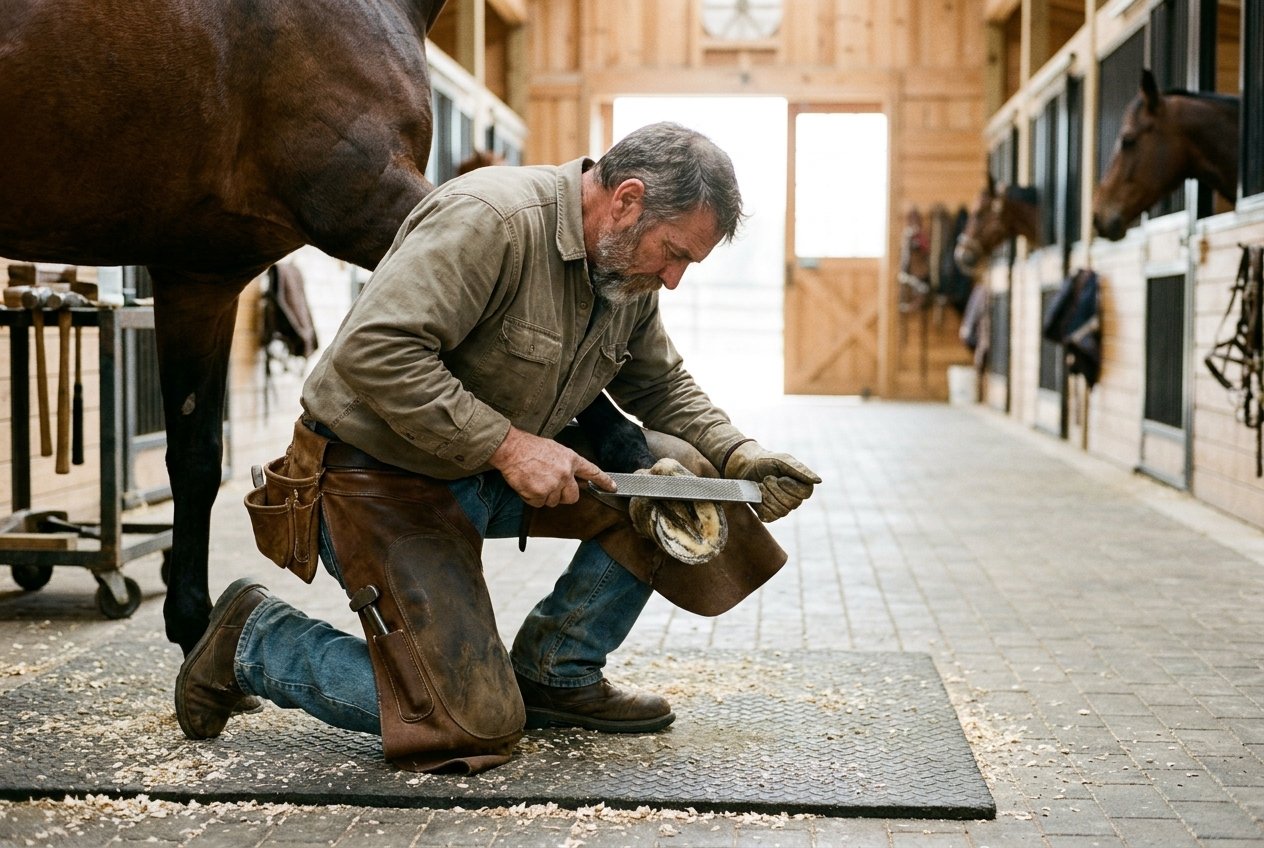
2. Hoof-Pastern Axis and Breakover Biomechanics
A cornerstone of this equine hoof care guide is assessing the Hoof-Pastern Axis (HPA). When viewed from the side, a straight, continuous line should pass down through the pastern bone and continue uninterrupted through the front of the hoof wall:
- Straight HPA (Ideal Balance): Equal distribution of concussive force across all three phalanx bones and the navicular apparatus.
- Broken-Back HPA (Long-Toe, Low-Heel Syndrome): The most widespread farriery fault. When heels crush under and the toe runs forward, the axis bends backward. This creates extreme continuous tension on the deep digital flexor tendon, inflames the navicular bursa, and delays breakover.
- Broken-Forward HPA (Club Foot): Steep hoof angle with an upright pastern, placing excessive weight on the toe and predisposing the coffin joint to concussive ringbone.
3. Daily Hoof Hygiene and Inspection Routines
Routine picking must be non-negotiable every single day:
- Morning and Pre-Ride Picking: Clear rocks, dried clay, and manure from the collateral grooves beside the frog. Stones packed into the central sulcus cause painful bruising or subsolar abscesses within hours.
- Digital Pulse Check: Lightly place fingers across the digital vessels at the back of the pastern or fetlock. In a healthy foot, the pulse is faint or barely palpable. A bounding, throbbing digital pulse is a critical indicator of acute inflammation, abscessation, or impending laminitis.
- Hoof Wall Temperature: Feel both front hooves simultaneously. An isolated hot hoof indicates focal trauma or abscess, while bilateral heat across both front feet strongly suggests metabolic laminitis.
4. Trimming and Shoeing Cycles: The 4 to 6 Week Rule
Adhering to strict calendar trimming intervals prevents cumulative orthopedic stress:
- The 4-to-6-Week Interval: Delaying farrier visits beyond 6 weeks causes the toe to migrate forward, crushing the heels and shifting the breakover point rearward. This dramatically increases strain on the deep digital flexor tendon (DDFT) and the suspensory apparatus.
- Seasonal Trimming Variations: Hoof horn grows up to 50% faster during lush spring and warm summer months compared to mid-winter freezes. Keep summer trim cycles strictly at 4 to 5 weeks.
5. Combating Common Hoof Ailments: Thrush and White Line
Early identification prevents opportunistic pathogens from destroying structural tissues:
- Thrush: An anaerobic bacterial infection (primarily Fusobacterium necrophorum) characterized by foul-smelling black discharge in the frog sulci. Treatment requires thorough debridement and oxygenating antiseptics, coupled with clean, dry bedding.
- White Line Disease (Onychomycosis / Seedy Toe): Opportunistic fungi and bacteria invade the stratified zone of the white line, hollowing out the hoof wall. Farriers must resect the separated outer wall to expose the organisms to air, followed by antimicrobial soaks.
- Quarter Cracks: Full-thickness fissures that originate at the coronary band and extend downward. Caused by uneven medial-lateral landing or crushed heels. Stabilization requires farrier unloading via a heart-bar shoe or patch.
6. Subsolar Hoof Abscess: Step-by-Step Emergency Protocol
When a horse is suddenly non-weight-bearing lame, an abscess is the most common cause. Follow this proven 4-step veterinary first-aid protocol:
- Confirm with Hoof Testers: Have a vet or farrier locate the focal pain point along the white line or sole. Never dig blindly into the sole if you are untrained.
- Warm Epsom Salt Soak: Soak the affected hoof in a bucket of warm water containing 2 cups of Epsom salts (magnesium sulfate) for 15 to 20 minutes to soften the horn and draw out purulent exudate.
- Animalintex / Ichthammol Poultice: Apply a warm, moist medicated poultice pad directly over the sole and frog, securing it with veterinary wrap (Vetrap) and a heavy duct-tape boot.
- Tetanus Vaccination Check: Because puncture wounds introduce anaerobic bacteria, verify your horse has received a tetanus toxoid booster within the preceding 12 months.
7. Understanding Laminitis: Acute Phase vs. Chronic Founder
Laminitis is a true medical emergency that destroys the microscopic Velcro-like laminae holding the coffin bone to the hoof wall:
- The Classic Stance: Rocking weight onto the hind legs with front legs pushed forward to relieve agonizing toe pressure.
- Emergency Cryotherapy: The single most effective therapy in early acute laminitis is continuous ice-water immersion of the distal limbs from the knee/hock down to the hooves for 48 to 72 hours. Cold vasoconstriction blocks inflammatory cytokines from reaching the digital laminae.
- Founder (Mechanical Rotation): When laminae fail completely, the pull of the deep digital flexor tendon rotates the tip of the coffin bone downward toward the sole. Prompt radiographic monitoring and heel-elevation support shoes are vital to arrest progression.
8. Modern Farriery: Barefoot, Composite, and Glue-On Shoes
Farriery has evolved far beyond standard iron shoes:
- Barefoot Performance: With balanced nutrition and varied terrain conditioning, many horses develop thick, dense soles and robust digital cushions, requiring only temporary hoof boots for rocky trails.
- Polyurethane Composite Shoes: Flexible synthetic shoes mimic natural hoof capsule expansion while providing shock absorption, ideal for horses recovering from joint trauma.
- Glue-On Technology: Eliminates nail holes entirely, indispensable for horses with thin, brittle, or shattered hoof walls recovering from white line resection.
9. Nutritional Building Blocks for Rock-Solid Hooves
Topical dressings cannot cure structural weakness born of dietary deficiencies:
- Biotin (Vitamin B7): Research proves daily supplementation of 20 to 30 mg of pharmaceutical-grade biotin significantly enhances tensile hoof wall strength and cellular cohesion.
- Methionine & Lysine: Essential sulfur-containing amino acids required for keratin cross-linking.
- Zinc and Copper: Essential cofactors for cellular replication. Always ensure zinc and copper are balanced in a 3:1 to 4:1 ratio to prevent absorption antagonism.
Frequently Asked Questions
Do hoof oils actually strengthen horse hooves?
Most commercial oils act primarily as moisture barriers. Over-applying petroleum or lacquer dressings can prevent the hoof horn from naturally breathing and absorbing environmental ambient moisture. Balanced nutrition and dry footing matter vastly more than bottled sealants.
How long does it take for supplements to improve hoof quality?
Because new hoof horn must grow down from the coronary band, nutritional changes will only be visible at the ground level after 8 to 12 months of consistent daily supplementation.
What causes sudden, severe 3-legged lameness with no outward wound?
In over 85% of sudden non-weight-bearing lameness cases, the culprit is a subsolar hoof abscess. Trapped bacteria create immense hydraulic pressure within the rigid capsule until your farrier or vet opens a drainage tract.
Can a horse with navicular syndrome still be ridden?
Yes. With modern diagnostic MRI, corrective farriery (easing breakover and elevating heels), bisphosphonate therapies (Tildren/Osphos), and controlled exercise, many horses manage navicular comfortably for years.
Conclusion
Adhering to a disciplined equine hoof care guide protects your equine partner’s foundational soundness. Through daily picking, rigorous environmental cleanliness, punctual trimming schedules, and targeted nutritional support, you ensure your horse moves with power, grace, and confident comfort every day.

1 thought on “Equine Hoof Care Handbook: Preventing Thrush, Cracks & Navicular Disease”