

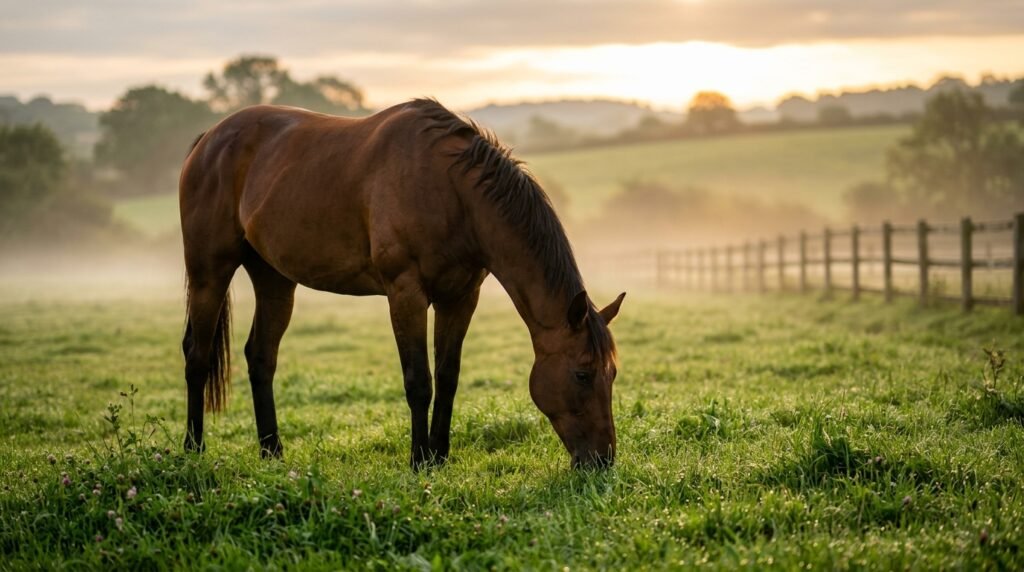
Formulating an optimal diet is the single most critical responsibility of any horse owner. Navigating the complex interplay of forage chemistry, non-structural carbohydrates, ration balancers, and micronutrient ratios can be overwhelming, but following an evidence-based equine nutrition feeding guide transforms equine wellness into a predictable science. Horses possess an evolutionary digestive system specifically engineered for continuous trickle feeding of fibrous grasses-a reality that modern stabling routines often contradict.
When equine nutrition is properly aligned with physiological demand, horses thrive: their top-lines fill out, coats display an iridescent silky sheen, hooves grow resilient horn, and digestive metabolic disorders are kept at bay. In this definitive guide, we break down gastrointestinal biology, essential nutrient categories, feeding mathematics, condition scoring, and clinical management protocols for every life stage.
Table of Contents
1. Understanding the Equine Hindgut Digestive System
To master any equine nutrition feeding guide, you must understand that the horse is a hindgut fermenter. The equine digestive tract spans nearly 100 feet and is divided into two distinct functional zones:
- The Foregut (Stomach and Small Intestine): The equine stomach is surprisingly small, holding only 2 to 4 gallons (roughly 8 to 15 liters). It produces gastric hydrochloric acid continuously at a rate of roughly 1.5 liters per hour, regardless of whether food is present. The small intestine is the primary absorption site for simple sugars, starches, amino acids, and fat-soluble vitamins (A, D, E, and K).
- The Hindgut (Cecum and Large Colon): The cecum and large colon serve as a massive 30-gallon fermentation chamber teeming with billions of beneficial symbiotic microbes, bacteria, and protozoa. These microorganisms ferment complex structural plant fibers (cellulose, hemicellulose) into volatile fatty acids (VFAs)-primarily acetate, propionate, and butyrate-supplying up to 70% of a horse’s daily maintenance energy.
2. The Forage Foundation: Why Fiber is Non-Negotiable
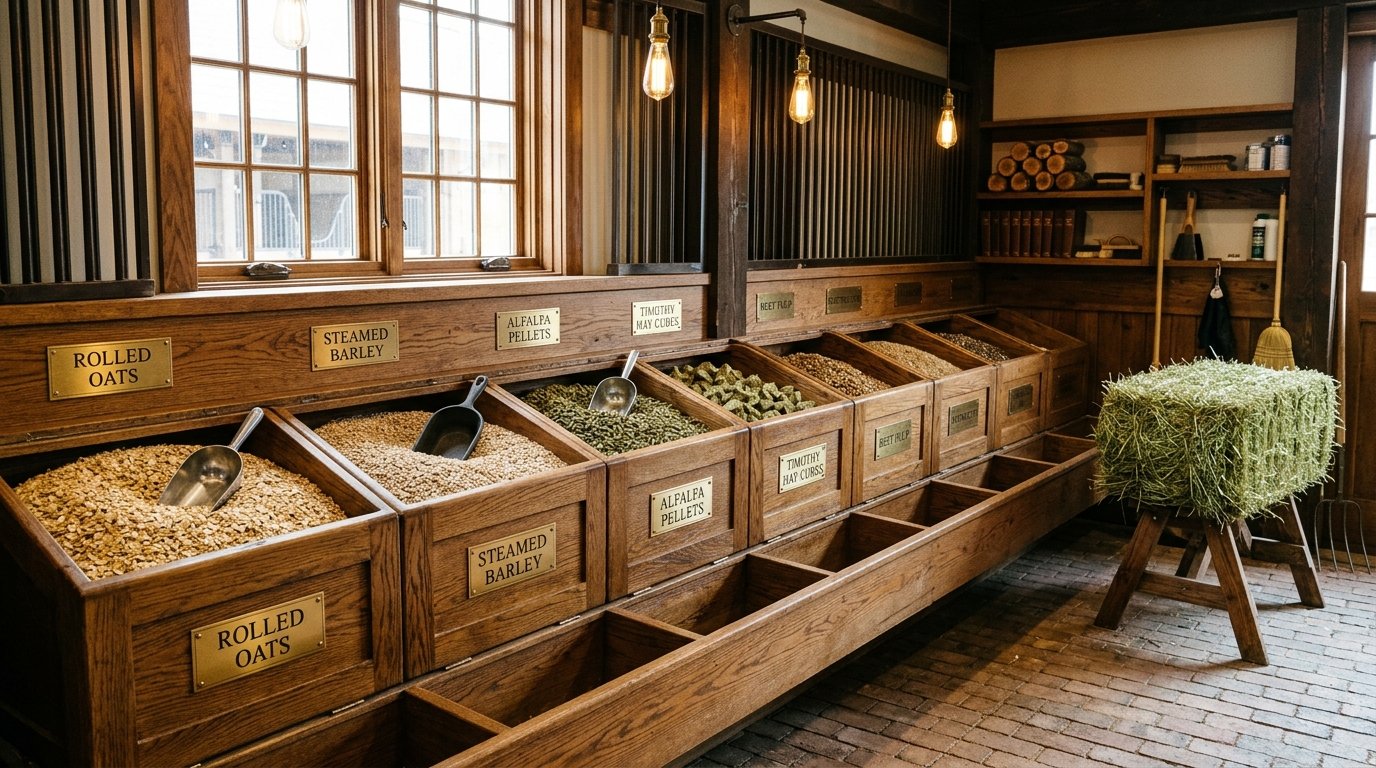
The baseline rule of equine nutrition is straightforward: forage must always constitute the primary component of the diet. An adult horse requires between 1.5% and 2.5% of its body weight in dry matter forage every single day.
For an average 1,100 lb (500 kg) horse, this equates to 16.5 to 25 lbs (7.5 to 11.5 kg) of pasture grass or high-quality preserved hay daily. Forage fulfills multiple critical biological functions:
- Gastric Ulcer Prevention: Continuous chewing produces bicarbonate-rich saliva, which naturally buffers corrosive stomach acid. Depriving a horse of forage for more than 4 hours drastically escalates the risk of Equine Gastric Ulcer Syndrome (EGUS).
- Hindgut Motility & Water Reservoir: Fiber holds vast quantities of water and electrolytes in the hindgut, acting as a metabolic hydration reservoir during exercise and transport.
- Thermal Regulation: Microbial fermentation of fiber acts as an internal furnace. In freezing winter conditions, increasing hay intake keeps a horse significantly warmer than increasing grain rations.
3. Nutritional Profile Comparison of Major Hays
Not all hay is created equal. Choosing the correct forage depends on your horse’s workload, metabolic health, and age. Here is a scientific comparison of primary forage varieties on an as-fed basis:
| Forage Variety | Crude Protein (CP) | Digestible Energy (DE) | Calcium (Ca) | Phosphorus (P) | Avg. NSC (Sugar/Starch) |
|---|---|---|---|---|---|
| Alfalfa (Lucerne) | 18% – 22% | 1.15 Mcal/lb | 1.30% | 0.24% | 9% – 12% |
| Timothy Grass | 8% – 11% | 0.88 Mcal/lb | 0.42% | 0.26% | 12% – 16% |
| Orchard Grass | 10% – 13% | 0.92 Mcal/lb | 0.38% | 0.30% | 11% – 15% |
| Coastal Bermuda | 7% – 10% | 0.82 Mcal/lb | 0.35% | 0.22% | 10% – 13% |
| Meadow Grass (Mixed) | 8% – 12% | 0.85 Mcal/lb | 0.45% | 0.28% | 10% – 14% |
Key Takeaway: Alfalfa provides superior protein and calcium, making it the premier forage for lactating broodmares, growing weanlings, and sport horses prone to ulcers. For easy keepers and horses prone to laminitis, mature Timothy or Orchard grass with an NSC below 10% is the safest selection.
4. Evaluating Body Condition Score (Henneke 1 to 9)
Visualizing weight is notoriously inaccurate. Professional equine nutritionists utilize the Henneke Body Condition Scoring (BCS) system, which evaluates fat deposition across six anatomical checkpoints: the crest of the neck, withers, behind the shoulders, ribs, loin, and tailhead.
- BCS 1 to 3 (Underweight to Emaciated): Ribs, spine, and hip bones prominently visible; lack of fat padding over withers and loin. Requires caloric density via soaked beet pulp, stabilized rice bran, and free-choice alfalfa.
- BCS 4 to 6 (Ideal Maintenance to Athletic Fit): Ribs cannot be visually seen but are easily felt with light finger pressure. Back is flat and neck blends smoothly into the shoulder. Target BCS for performance horses is 5.0 to 5.5; broodmares thrive best at 6.0.
- BCS 7 to 9 (Fleshy to Extremely Obese): Obvious cresty neck, fat dimpling along the spine, heavy fat pads behind shoulders and around tailhead. Carries severe laminitis risk; requires immediate elimination of concentrates, grazing muzzles, and weighed low-NSC grass hay at 1.5% of body weight.
5. Concentrates, Grains, and the Starch Threshold
Concentrates should only be added when high-quality forage alone cannot fulfill a horse’s caloric demands-such as hard-working sport horses, racehorses, or underweight seniors:
- Energy Partitioning: Use energy sources suited to discipline. Fast-twitch explosive power (barrel racing, polo, sprint racing) relies partly on non-structural carbohydrates (NSCs) like steamed rolled oats. Long-duration endurance demands cool energy from fermentable super-fibers (beet pulp, soy hulls) and vegetable oils.
- The Maximum Starch Rule: To prevent hindgut acidosis, never feed more than 0.5% of the horse’s body weight in grain per single meal (no more than 5 lbs of concentrate for a 1,000 lb horse). Large starch meals overwhelm the small intestine’s amylase capacity, dumping undigested sugars into the hindgut where lactic acidosis destroys beneficial microflora.
- Ration Balancers: For horses that maintain weight easily on pasture or hay alone, a low-calorie ration balancer (1-2 lbs daily) delivers essential protein, vitamins, and minerals without adding excess starch or unwanted calories.
6. Essential Micronutrients: Minerals and Vitamins
A scientifically balanced diet requires strict attention to mineral ratios and fat-soluble vitamin intake:
- Calcium to Phosphorus Ratio (Ca:P): The golden ratio is between 1.5:1 and 2:1. Excess phosphorus inhibits calcium absorption, mobilizing calcium out of bone tissue and causing metabolic bone disease (osteodystrophia fibrosa).
- Zinc to Copper Ratio: Keep zinc and copper at approximately a 3:1 to 4:1 ratio. Imbalances lead to dull coats, bleached manes, and compromised connective tissue resilience.
- Vitamin E & Selenium: Natural Vitamin E (d-alpha-tocopherol) is a potent neurological antioxidant. Horses without daily access to lush pasture require 1,000 to 2,000 IU of supplemental Vitamin E daily to prevent Equine Motor Neuron Disease (EMND) and muscle soreness.
- Free-Choice Sodium Chloride: Plain white salt must be accessible 24/7. An adult horse requires a baseline of 2 tablespoons (approx. 30 grams) of salt daily, doubling during heavy sweat loss.
7. Managing Equine Metabolic Syndrome and Gastric Ulcers
Modern diets are the primary cause of two epidemic equine conditions:
- Equine Gastric Ulcer Syndrome (EGUS): Over 60% of performance horses suffer from gastric ulcers. Feeding 2 to 3 lbs of alfalfa hay 30 minutes prior to exercise creates a protective fibrous mat that traps acidic fluid in the lower glandular stomach, preventing it from splashing into the sensitive squamous mucosa during trot and canter.
- Equine Metabolic Syndrome (EMS) & Insulin Dysregulation: Similar to human Type 2 diabetes. High insulin levels triggered by sweet feeds directly damage the sensitive laminae of the hooves. Keep non-structural carbohydrates (NSC = WSC + Starch) strictly under 10% to 12%. Soaking grass hay in warm water for 30 to 60 minutes leaches out up to 30% of water-soluble sugars.
8. Senior Horse Nutrition: Overcoming Aging Challenges
As horses cross into their twenties, physiological changes demand dietary reformulation:
- Mastication & Wave Mouth: Worn, missing, or sharp teeth prevent seniors from properly grinding long-stem hay, leading to “quidding” (dropping wads of unchewed forage) and severe impaction colic risk.
- Complete Feeds: Transition dentally compromised seniors to complete pelleted feeds formulated with high fiber that can be soaked into a warm, easily digestible mash.
- Decreased Digestibility: Senior intestines absorb phosphorus and protein less efficiently. Seek senior feeds containing at least 14% crude protein and fortified amino acids (lysine, threonine).
9. The Golden Rules of Equine Feeding Management
Adhering to foundational management guidelines guarantees peace of mind and long-term vitality:
- Feed by Weight, Never by Volume: A coffee can of corn weighs far more than a can of oats. Weigh every ration on a digital hanging scale.
- Make Dietary Changes Gradually: Introduce any new grain, balancer, or fresh hay cutting over a transition period of 10 to 14 days to allow gut microflora time to adapt.
- Clean, Fresh Water at All Times: Horses drink between 8 and 15 gallons of fresh water daily. Dehydration is the leading trigger of feed impaction colic.
- Feed Little and Often: Divide grain rations into two, three, or four smaller daily meals rather than one large feeding.
References and Further Reading
- Bureau of Land Management – Wild Horse and Burro Program
- BLM – Mustang Adoption Program
- BLM – Adoption and Purchase FAQs
- BLM – Wild Horse Population Data
Frequently Asked Questions
How do I know if my horse is getting enough protein?
Look at the top-line musculature along the withers, loin, and rump. Protein deficiencies manifest as muscle wasting, a dipped swayback appearance, poor hoof quality, and a brittle dull coat.
Can I feed sweet feed to every horse?
Traditional sweet feeds coated in heavy molasses are high in non-structural carbohydrates (NSCs) and are strongly contraindicated for horses predisposed to Equine Metabolic Syndrome (EMS), Cushing’s disease (PPID), or PSSM.
Why is free-choice hay better than scheduled feedings?
Free-choice hay keeps the digestive tract constantly active, mimicking natural grazing patterns, neutralizing continuous acid production in the stomach, and eliminating boredom-induced stereotypic vices such as cribbing and weaving.
Should I add corn oil to my horse’s grain?
While corn oil adds dense calories, it is excessively high in inflammatory Omega-6 fatty acids. Equine nutritionists strongly prefer flaxseed oil, canola oil, or camelina oil, which provide a balanced ratio of anti-inflammatory Omega-3 fatty acids.
Conclusion
Implementing an authoritative equine nutrition feeding guide requires respecting the horse’s evolutionary design. Prioritize endless clean fiber, balance trace minerals with precision, supply unlimited fresh water, and feed grain only as needed. By taking control of the feed bucket, you build the bedrock for a lifetime of equine health, athletic stamina, and vitality.
