


For decades, horse owners adhered to a simplistic rotational deworming calendar: administer a different chemical paste every eight weeks like clockwork. Today, equine parasitologists warn that this outdated practice has backfired catastrophically, creating widespread anthelmintic resistance across small strongyles, roundworms, and tapeworms. Transitioning to a modern, evidence-based horse deworming schedule guide is no longer optional—it is a vital veterinary imperative.
Rather than treating every horse identically, modern parasite management relies on quantitative diagnostic testing, pasture hygiene, and targeted therapy. By identifying high egg shedders and preserving parasite refugia, equestrians can protect herd health while preserving drug efficacy for future generations. In this comprehensive guide, we dissect equine parasite biology, Fecal Egg Count (FEC) methodology, resistance testing calculations, and pediatric foal protocols.
Table of Contents
1. The Crisis of Anthelmintic Resistance
Anthelmintic resistance occurs when parasites survive standard therapeutic drug dosages and pass resistant genes down to their offspring. The American Association of Equine Practitioners (AAEP) emphasizes alarming biological realities:
- No New Drug Classes: Pharmaceutical companies have not introduced a genuinely new class of equine anthelmintics in over 35 years. The existing chemical arsenals (benzimidazoles, pyrimidines, macrocyclic lactones) are all we have.
- Widespread Small Strongyle Resistance: Cyathostomins (small strongyles) are almost universally resistant to fenbendazole and oxibendazole worldwide, with mounting resistance to pyrantel and early signals of reduced egg reappearance periods for ivermectin.
- The Concept of Refugia: Preserving a sub-population of parasites that have never been exposed to dewormers (refugia) is essential. These susceptible parasites dilute resistant genes in the pasture gene pool.
2. The 80/20 Rule and Fecal Egg Counts (FEC)
The foundation of any modern horse deworming schedule guide is the biological 80/20 rule: roughly 20% of horses in any herd harbor 80% of the internal parasites. These individuals are “high shedders” due to individual genetic immune responsiveness:
- Low Shedders (0–200 EPG): Roughly 50–60% of adult horses naturally suppress parasite egg production. They require only 1 or 2 strategic foundation treatments annually.
- Moderate Shedders (200–500 EPG): Represent approximately 20–30% of the herd. Require 2 to 3 targeted treatments.
- High Shedders (>500 EPG): Represent roughly 15–20% of horses. They contaminate the pastures for everyone else and require 3 to 4 targeted deworming interventions per season.
3. How to Perform a McMaster Fecal Egg Count
Veterinary diagnostic laboratories utilize the modified McMaster flotation method to determine Eggs Per Gram (EPG):
- Sample Collection: Collect a fresh fecal ball (under 2 hours old) and store airtight in a refrigerator if not tested immediately.
- Flotation Solution: Weigh 4 grams of manure and thoroughly mix with 26 mL of saturated sodium nitrate or sodium chloride flotation solution (specific gravity 1.20 to 1.25).
- Straining & Loading: Strain the slurry through gauze and pipette into both grid chambers of a McMaster slide.
- Microscopic Counting: Count all strongyle eggs under 10x magnification across both ruled grids. Multiply the total egg count by 25 to calculate total EPG.
4. Fecal Egg Count Reduction Test (FECRT) Formula
How do you know if the dewormer you bought actually worked? Perform an FECRT every 2 years using this mathematical equation:
FECRT % = [(Pre-treatment EPG − Post-treatment EPG) / Pre-treatment EPG] × 100
Test the horse before dosing, and re-test exactly 14 days later. If the egg count does not drop by at least 95% for ivermectin/moxidectin or 90% for fenbendazole/pyrantel, confirmed anthelmintic resistance is present on your farm for that chemical compound.
5. Major Equine Parasites and Their Seasonal Cycles
Targeting the right chemical compound requires understanding which parasite is active during specific seasonal conditions:
- Small Strongyles (Cyathostomins): The primary parasite of adult horses. Larvae burrow into the mucosal lining of the cecum and colon, entering a dormant hibernation state (hypobiosis).
- Tapeworms (Anoplocephala perfoliata): Cluster tightly around the ileocecal valve, causing ulceration, gut wall thickening, and intussusception. Transmitted via microscopic pasture oribatid mites in late summer and autumn. Praziquantel is the single specific treatment.
- Ascarids (Parascaris equorum): Massive white roundworms (up to 12 inches long) targeting foals under 18 months. Larvae migrate through liver and lungs, causing coughing and unthriftiness. Adult roundworms commonly obstruct the small intestine. Highly resistant to ivermectin; fenbendazole remains the drug of choice.
- Stomach Bots (Gasterophilus): Adult bot flies deposit sticky yellow eggs on horse leg hairs. Larvae are licked, hatch in the mouth, and attach to the stomach wall through winter. Eradicated post-frost with ivermectin.
6. The Deadly Threat of Larval Cyathostominosis
When millions of encysted small strongyle larvae simultaneously emerge from the intestinal wall in late winter or early spring, catastrophic damage ensues:
- Clinical Symptoms: Sudden profound profuse watery diarrhea, severe hypoproteinemia (ventral edema / bottle jaw), rapid weight loss, and fever. Carries a mortality rate of up to 50%.
- Diagnostic Paradox: Fecal egg counts are often zero during cyathostominosis because emerging larvae have not yet matured into egg-laying adults!
- Treatment Protocol: Emergency aggressive therapy requires Moxidectin (Quest) or a 5-day double-dose Fenbendazole (Panacur Powerpac) accompanied by corticosteroids (dexamethasone) to control gut wall anaphylaxis.
7. Pediatric Foal and Weanling Deworming Blueprint
Foals have zero immune resistance and must NOT be managed with adult protocols:
- 2 to 3 Months of Age: First treatment targeting ascarids (roundworms). Administer Fenbendazole (10 mg/kg). Avoid ivermectin due to widespread ascarid resistance.
- Just Prior to Weaning (approx. 5–6 Months): Perform FEC. Administer Fenbendazole or Pyrantel. Check for strongyle presence.
- 9 Months of Age: Target both strongyles and roundworms. Administer Ivermectin or Pyrantel embonate.
- 12 Months of Age: Universal broad-spectrum treatment for strongyles and tapeworms using Ivermectin + Praziquantel.
8. The Modern Seasonal Deworming Calendar
Follow this targeted seasonal blueprint for adult equines:
- Spring (Start of Grazing Season): Perform Fecal Egg Count (FEC). Administer baseline ivermectin or moxidectin to all horses to clear overwintered strongyles. Classify each horse into low, moderate, or high shedder status.
- Summer (Peak Heat): Deworm ONLY high shedders (>500 EPG). In warm climates, summer heat waves above 85°F (30°C) desiccate and destroy pasture larvae within weeks, rendering blanket treatments unnecessary.
- Late Autumn (Post-Frost): Universal treatment for all horses regardless of FEC. Administer an ivermectin/praziquantel or moxidectin/praziquantel combination to eradicate tapeworms, encysted strongyles, and stomach bots.
- Winter: Perform Fecal Egg Count Reduction Tests (FECRT) bi-annually: test before deworming and 14 days after to confirm drug efficacy exceeding 95%.
9. Pasture Management: The First Line of Defense
Environmental management reduces reliance on chemical anthelmintics by up to 75%:
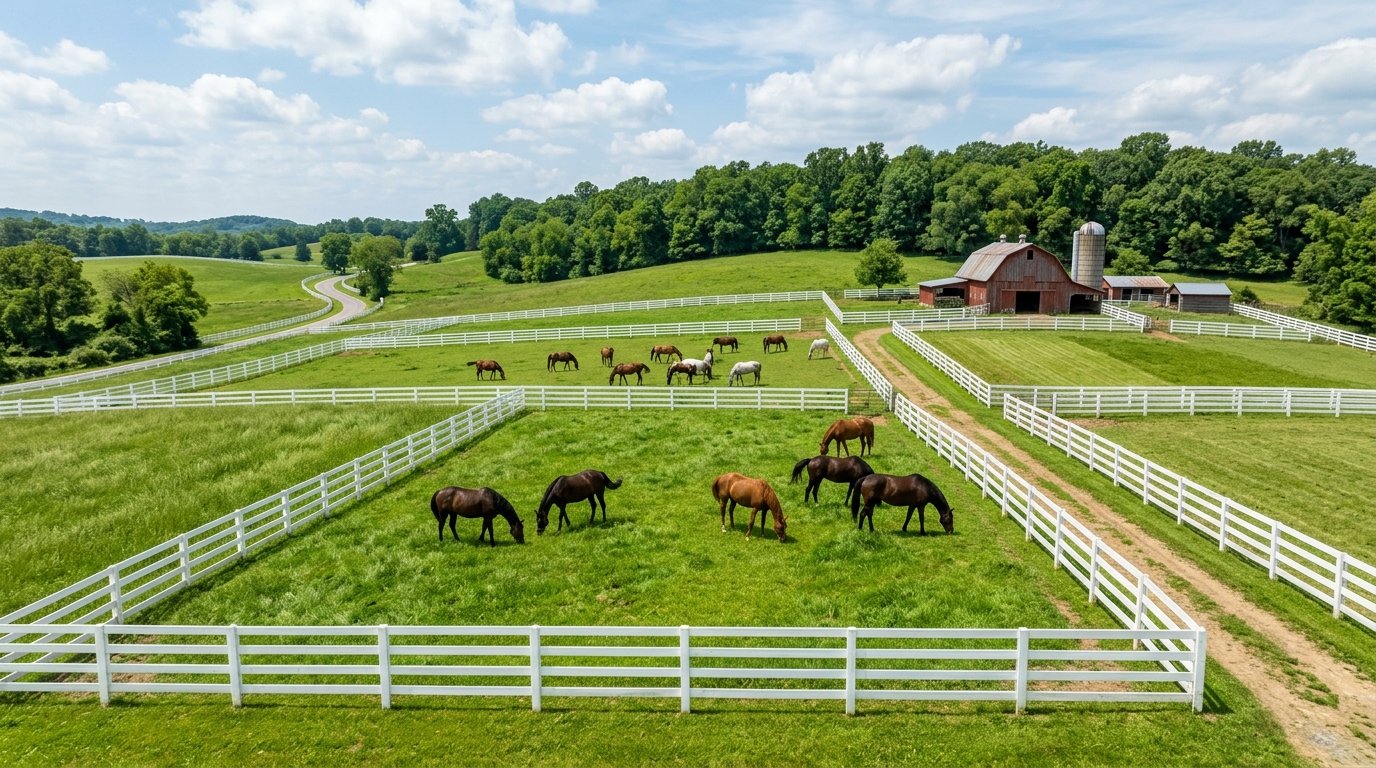
- Manure Removal: Pick up paddocks and high-traffic sacrifice areas at least twice weekly. Larvae take 5 to 7 days to transition into mobile infective L3 stages that crawl onto blades of grass.
- Never Drag Pastures in Cool Weather: Harrowing in cloudy, mild weather simply scatters infective larvae across grazing grass. Only drag pastures during hot, dry summer heat waves while keeping horses off the field for 4 to 6 weeks.
- Cross-Grazing with Cattle or Sheep: Bovine and ovine species do not share common strongyle parasites with equines. Grazing cattle in horse paddocks cleanses fields by vacuuming up equine larvae harmlessly.
Frequently Asked Questions
Can tapeworm eggs be detected on a standard fecal egg count?
Rarely. Tapeworms release eggs intermittently in egg packets that standard fecal flotation often misses. Because of this diagnostic limitation, universal annual treatment with praziquantel in late autumn is standard veterinary recommendation.
Why is moxidectin restricted in young foals?
Moxidectin is lipophilic (binds to fat). Young foals and miniature horses lack sufficient body fat stores, drastically increasing the risk of blood-brain barrier penetration and neurotoxicity. Always consult a veterinarian for pediatric deworming.
Will underdosing paste dewormer harm my horse?
Underdosing is the fastest pathway to chemical resistance. Exposing parasites to sub-lethal concentrations allows resistant survivors to propagate. Always estimate weight conservatively upward or use a weight tape before dosing.
Conclusion
Embracing an evidence-based horse deworming schedule guide preserves medical efficacy while safeguarding your herd. By substituting arbitrary calendar dosing with precise fecal diagnostics, targeted seasonal anthelmintics, and pasture sanitation, you ensure optimal intestinal wellness and long-term equine resilience.
