

# The Complete Horse Nutrition & Feeding Guide: Forage, Grains, Supplements & Colic Prevention
Feeding a horse correctly is both a delicate science and an exacting art. Unlike dogs, cattle, or humans, horses possess a biologically fragile, uniquely specialized digestive architecture. As non-ruminant hindgut fermenters, they are evolutionary marvels designed to spend sixteen to eighteen hours a day grazing fibrous, low-calorie native grasses on the move.
Yet in modern domestic management, horses are often kept in stalls and fed concentrated high-starch meals on rigid human schedules. This fundamental mismatch between evolutionary biology and contemporary husbandry is the leading driver of the two most dreaded words in equine medicine: Colic and Equine Gastric Ulcer Syndrome (EGUS).
Whether you manage an easy-keeping trail mount, a pregnant broodmare, or an elite Grand Prix athlete, this comprehensive guide provides the scientific foundation, nutritional formulas, and practical feeding strategies to keep your horse thriving, energized, and colic-free.
1. The Anatomy of Equine Digestion: Understanding the Hindgut
To formulate an effective equine diet, you must trace a bite of forage through the digestive tract:
[ Small Stomach (8-15 L / Continuous Acid Production) ]
                        |
[ Small Intestine (20 m / Enzymatic Digestion of Protein, Fat, Simple Sugars) ]
                        |
[ Cecum (30 L / Microbial Fermentation Vat & Bacterial Microflora) ]
                        |
[ Large Colon (Flexures & Narrow Turns: Sternal, Pelvic, Diaphragmatic) ]
                        |
[ Small Colon & Rectum (Water Reabsorption & Fecal Formation) ]
Critical Anatomical Facts Every Horse Owner Must Know:
- The Small, Inflexible Stomach: A 1,000-pound horse possesses a stomach holding merely 2 to 4 gallons (8 to 15 liters). It fills and empties rapidly. Feeding large grain meals overloads the stomach, pushing undigested starch into the delicate hindgut.
- Horses Cannot Vomit: The one-way muscular cardiac sphincter valve connecting the esophagus to the stomach is anatomically incapable of opening backward. If a horse gorges on grain or suffers gastric rupture, it cannot regurgitate—making digestive disturbances immediately life-threatening.
- Continuous Gastric Acid: Unlike humans, whose stomachs secrete hydrochloric acid primarily in response to meals, the horse’s stomach secretes gastric acid 24 hours a day, 7 days a week non-stop. In nature, constant chewing produces liters of alkaline, bicarbonate-rich saliva that neutralizes this acid. If a horse stands in a stall with an empty stomach for more than four hours, acid splashes against the unprotected upper squamous mucosa, causing painful gastric ulcers.
- The Microbial Fermentation Vat (Hindgut): The cecum and large colon house trillions of beneficial anaerobic bacteria, protozoa, and fungi. These microbes ferment complex structural fiber (cellulose, hemicellulose) into Volatile Fatty Acids (VFAs)—primarily acetate, propionate, and butyrate—which provide up to 70% of the horse’s total daily energy.
2. The Inviolable Forage First Rule
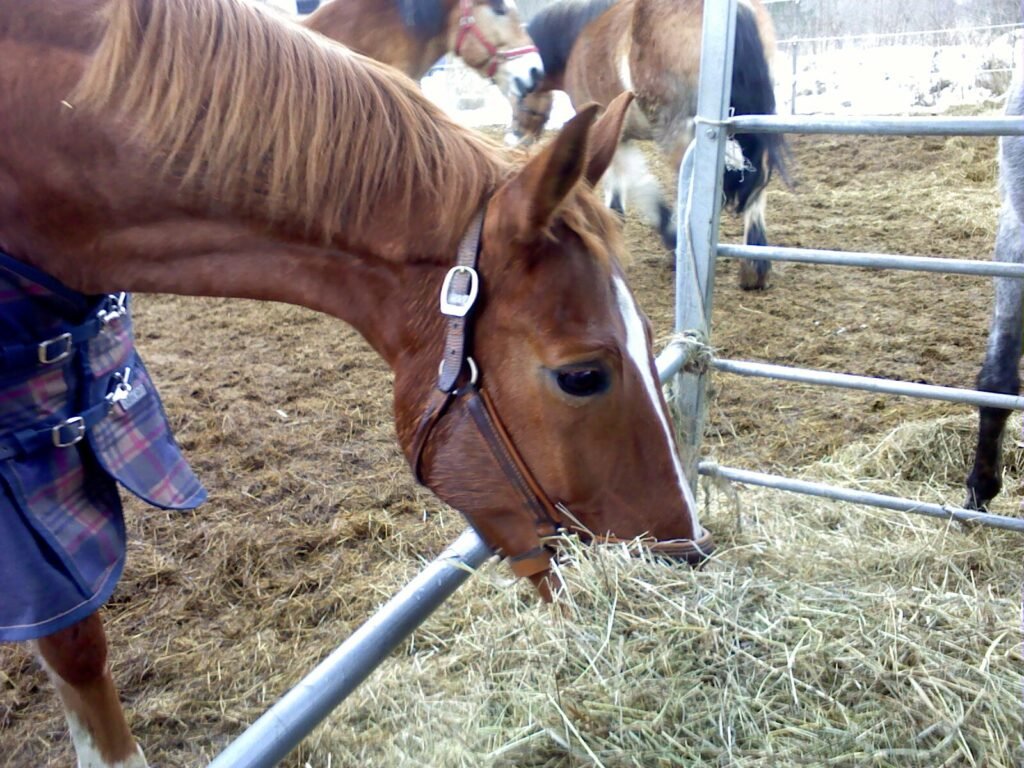
Forage—whether fresh pasture grass, high-quality baled hay, or hay cubes—is the non-negotiable foundation of every equine diet. Concentrates should only be considered after forage requirements are fully met.
+--------------------------------------------------------------------------+
|                     THE GOLDEN FORAGE CALCULATION                        |
+--------------------------------------------------------------------------+
|  Baseline Rule: A horse must consume 1.5% to 2.5% of its body weight    |
|                 in dry matter forage every single day.                   |
|                                                                          |
|  Example for a 1,000 lb (450 kg) Horse:                                  |
|   - Minimum Survival Threshold (1.5%):  15 lbs (6.8 kg) hay / day        |
|   - Standard Maintenance (2.0%):        20 lbs (9.1 kg) hay / day        |
|   - Hard Working / High-Metabolism:     25 lbs (11.3 kg) hay / day       |
+--------------------------------------------------------------------------+
Hay Varieties Compared:
| Hay Type | Crude Protein | Calcium-to-Phosphorus | Best Suited For | Watch Out For |
|---|---|---|---|---|
| **Timothy / Orchard Grass** | 8% – 12% | Ideal (~1.5:1) | Pleasure horses, easy keepers, metabolic horses | Dust, mold spores in poorly cured bales |
| **Coastal Bermuda Grass** | 7% – 10% | Balanced (~1.5:1) | Southern pastures, general maintenance | Fine, wiry texture; associated with ileal impactions if teeth are poor |
| **Alfalfa (Lucerne)** | 18% – 22% | Very High Calcium (5:1) | Growing foals, hard-working athletes, ulcer recovery | Caloric density, enteroliths (intestinal stones) in hard water regions |
Pro Tip for Ulcers: Feeding 1 to 2 flakes of alfalfa hay 30 minutes before riding creates a protective, calcium-rich alkaline “slosh mat” floating over the stomach acid, buffering the lining from acid splashes during canter or jump work.
3. Concentrates & Grains: When, What, and How Much
Grains and commercial concentrates are designed solely to supply supplemental calories, amino acids, and micronutrients when forage alone cannot maintain body condition or athletic workload.
       [ Whole Grains (Oats, Corn, Barley) ]
                         |
      (High Non-Structural Carbohydrates / Starch)
                         |
      [ Risk of Small Intestinal Starch Spillover ]
                         |
    [ Cecal Acidosis -> Bacterial Die-Off -> Endotoxin -> Laminitis ]
The Rules of Safe Concentrate Feeding:
- Never Feed More Than 0.5% Body Weight in a Single Meal: For a 1,000-pound horse, a grain meal should never exceed 5 pounds (2.3 kg) at one time. If a horse requires 8 pounds of grain daily, divide it into two or three feedings spaced throughout the day.
- Prioritize Commercial Fortified Pellets: Modern commercial feeds use pressure-extrusion and steam-flaking to gelatinize starches, making them easily digestible in the small intestine before they can reach the cecum.
- The “Easy Keeper” Solution (Ration Balancers): If your horse maintains weight easily on hay alone, feeding grain will make them obese. Instead, feed 1 to 2 pounds daily of a concentrated Ration Balancer. This provides essential vitamins, chelated minerals, and quality amino acids (lysine, methionine) with virtually zero starch or excess calories.
4. The Deadly Starch Overload Mechanism
When a horse consumes an excessive amount of sweet feed, corn, or lush spring grass rich in non-structural carbohydrates (NSC), the small intestine’s amylase enzymes are overwhelmed:
+--------------------------------------------------------------------------+
|                     THE LAMINITIS CASCADE MECHANISM                      |
+--------------------------------------------------------------------------+
|  1. Undigested starch escapes into the cecum and large colon.            |
|  2. Amylolytic bacteria (*Streptococcus bovis*) undergo a population     |
|     explosion, rapidly fermenting starch into lactic acid.               |
|  3. Cecal pH plummets from neutral (6.8) into severe acidosis (< 5.5).   |
|  4. Beneficial fiber-fermenting microbes die off en masse.              |
|  5. Dying Gram-negative bacteria release massive waves of toxic          |
|     **endotoxins** into the bloodstream through compromised gut walls.   |
|  6. Endotoxins trigger systemic inflammation, shutting down blood flow    |
|     to the digital laminae of the hooves -> **Acute Laminitis**.         |
+--------------------------------------------------------------------------+
5. Preventing Colic: Practical Barn Management Protocols
Colic is the number-one medical cause of death in horses. The vast majority of impaction and gas colics are directly traceable to preventable management missteps:
- The 14-Day Transition Rule: Any change in hay supplier, cutting, or grain brand must be phased in over 10 to 14 days. Blend 25% new feed with 75% old feed for 3 days, 50/50 for 3 days, 75/25 for 3 days, before full transition. This gives hindgut microflora time to adapt.
- Slow Feeders & Hay Nets: Feeding hay in small-mesh (1.5-inch) slow-feeder nets mimics natural trickle feeding, prevents rapid gorging, reduces waste, and eliminates boredom-induced vices like cribbing or wood chewing.
- Sand Colic Prevention: Never feed hay directly off sandy ground. Horses ingest sand particles that settle into the heavy ventral colon, forming dense obstructions. Feed off rubber stall mats or raised mangers, and administer a 7-day monthly course of psyllium seed husk to sweep sediment out.
- Hydration Vigilance: An average 1,000-pound horse drinks 8 to 12 gallons (30 to 45 liters) of water daily—and up to 20 gallons in intense summer heat. In winter, horses drink significantly less if water is freezing cold, leading to winter impaction colic. Install thermostatically controlled bucket heaters to maintain water at 45°F to 55°F (7°C to 13°C).
6. Essential Minerals, Salt & Electrolytes
A shocking percentage of domestic horses suffer from chronic subclinical sodium deficiency:
- The Plain White Salt Imperative: Every horse must have free-choice access to plain white salt (loose or block) or receive 1 to 2 tablespoons (1 oz) of loose table salt top-dressed on their feed daily.
- Why Red “Trace Mineral” Blocks Fail: Traditional red mineral blocks are 95% to 98% salt flavored with microscopic traces of minerals. Horses cannot consume enough to meet mineral requirements without overdosing on salt, and the rough block texture often discourages horses with smooth tongues. Provide chelated loose minerals.
- Electrolyte Science: Commercial electrolytes should only be administered when a horse is actively sweating heavily from work or heat, and always alongside a separate bucket of plain, unflavored water. Giving electrolytes to a dehydrated horse without ample water causes severe gastric ulceration and dehydration shock.
7. Equine Gastric Ulcer Syndrome (EGUS): Signs & Management
Studies show that up to 60% of show horses and over 90% of racehorses suffer from gastric ulcers.
+--------------------------------------------------------------------------+
|                        SIGNS OF GASTRIC ULCERS                           |
+--------------------------------------------------------------------------+
|  - "Girthiness": Biting, pinning ears, or kicking when tightening girth  |
|  - Picky eating, leaving grain behind, or pausing while chewing         |
|  - Dull, harsh, unthrifty coat that resists grooming shine               |
|  - Subtle behavioral resistance under saddle (refusing to move forward)  |
|  - Recurrent, low-grade, unexplained mild colic episodes                 |
+--------------------------------------------------------------------------+
Definitive Treatment:
Gastric ulcers can only be officially diagnosed via endoscopic gastroscopy (a 3-meter camera passed through the nostril into the stomach). The FDA-approved medical gold standard is Omeprazole paste (Gastrogard), an unyielding proton-pump inhibitor administered once daily on an empty stomach for 28 consecutive days, followed by a gradual tapering dose.
8. Formulating Sample Daily Rations by Horse Life Stage
+--------------------------------------------------------------------------+
|  A. THE EASY-KEEPER / IDLE TRAIL HORSE (1,000 lbs)                       |
|     - Mixed grass hay (Timothy/Bermuda): 18-20 lbs daily                |
|     - Commercial Ration Balancer pellet: 1.0 lb daily                    |
|     - Plain white loose salt: 1-2 tablespoons daily                      |
|     - Clean fresh water: Free-choice                                     |
+--------------------------------------------------------------------------+
|  B. THE ACTIVE ATHLETE / EVENTER (1,000 lbs - Moderate/Heavy Work)        |
|     - Grass hay: 18 lbs + Alfalfa hay: 4 lbs daily                       |
|     - Fortified Performance Feed (low-starch, fat-added): 5-6 lbs daily  |
|     - Ground Flaxseed or Camelina Oil: 4 oz daily (Omega-3s)             |
|     - Daily electrolytes post-workout + loose salt: Free-choice          |
+--------------------------------------------------------------------------+
|  C. THE SENIOR HORSE (Poor Dentition / Missing Molars)                   |
|     - Complete Senior Extruded Feed: 12-16 lbs daily (split in 3 meals)  |
|     - Soaked Beet Pulp shreds (molasses-free): 2-4 lbs dry weight soaked |
|     - Soaked Alfalfa/Timothy hay cubes or chopped forage mash            |
+--------------------------------------------------------------------------+
Conclusion: Nutrition as Preventative Medicine
Every flake of hay dropped into the manger and every scoop of grain measured in the feed room is a medical decision. Feeding a horse is not merely about providing fuel; it is about maintaining a delicate, living symbiotic ecosystem of billions of microorganisms within the equine gut.
By honoring the horse’s evolutionary need for continuous fiber, limiting inflammatory starches, prioritizing hydration and salt, and introducing feed changes with meticulous patience, you safeguard your partner’s health, vitality, and longevity for decades to come.
Equestrian Journalist & Equine Welfare Specialist
Sarah Mitchel brings over fifteen years of hands-on equine management, classical dressage training, and veterinary wellness reporting to Horse Silk. Dedicated to promoting ethical horsemanship, pedigree preservation, and science-backed care protocols.
🐎 Recommended Equine Reading & Official Resources
Continue exploring our breed and health archives: discover the Horse Colic Prevention & Emergency Protocol and master our veterinary-approved Equine Joint Health & Longevity Care.
For verified international breed registrations and equestrian standards, consult the official American Association of Equine Practitioners (AAEP).

2 thoughts on “Complete Horse Nutrition Feeding Guide: Forage, Concentrates & Minerals”