

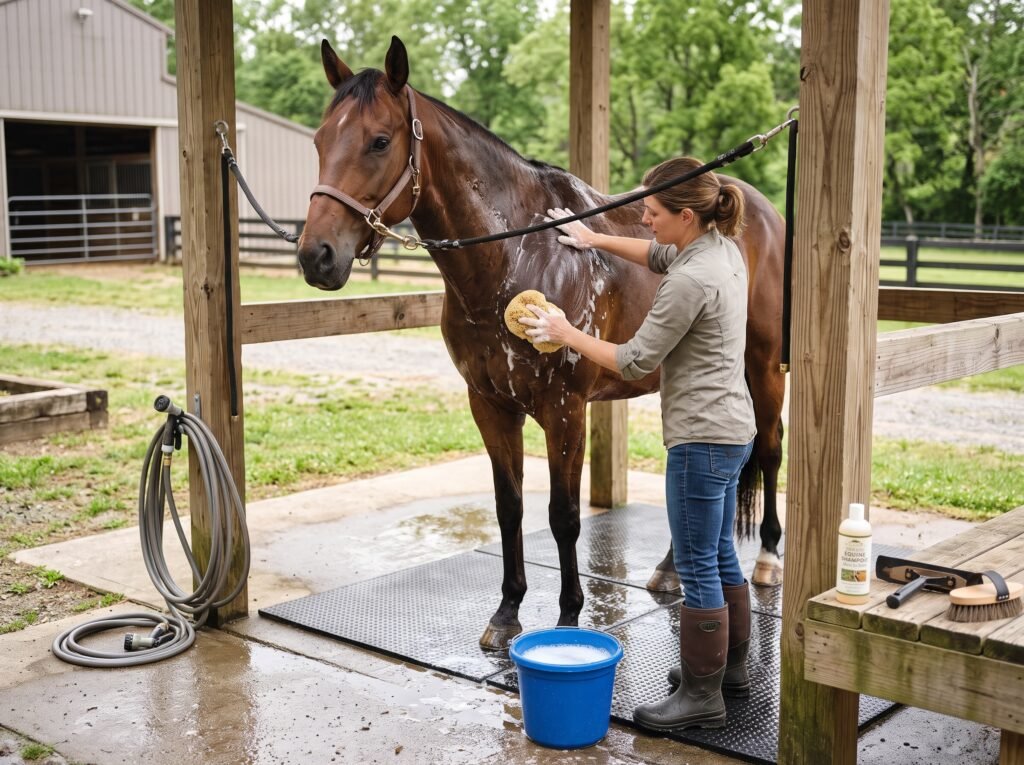
Table of Contents
The Complete Guide to Bathing a Horse: Professional Techniques, Safety, and Skin Health
Bathing a horse is an essential part of proper equine grooming and skin care. However, bathing a half-ton animal in a confined, slippery space is far from simple. Equine and human injuries can occur in wash bays because of poor hose management, sudden water-related panic, and slippery concrete surfaces.
Well-meaning horse owners can also cause skin problems by overusing harsh shampoos and detergents, which strip away the skin’s natural protective oils and may contribute to fungal and bacterial infections.
When performed correctly, bathing is more than an aesthetic routine. It provides an opportunity to remove dirt, soothe tired muscles, clean the coat, manage external parasites, and inspect the horse’s skin for potential problems.
This comprehensive guide covers wash bay safety, water temperature, shampoo dilution, professional bathing techniques, sweat scraping, and common equine skin conditions such as rain rot and sweet itch.
1. Wash Bay Safety: Setting the Stage for Success
Before turning on the water, make sure the washing environment and equipment are properly prepared.
Wash Bay Safety Checklist
| Safety Requirement | Recommendation |
|---|---|
| Non-slip footing | Use heavy-duty grooved or textured rubber mats. Avoid bathing on slippery concrete. |
| Cross-ties | Use sturdy cross-ties equipped with panic snaps or quick-release safety ties. |
| Overhead hose boom | Use an articulated overhead swing arm to keep hoses suspended and prevent tangling. |
| Clear escape route | Avoid positioning yourself between the horse and a wall or other obstacle. |
| Lead rope safety | Never wrap a lead rope or shank around your hand or arm. |
Acclimating a Water-Skeptical Horse
If a young or anxious horse is afraid of running water, never force the hose directly onto its face or back.
Instead, introduce the water gradually using the following approach:
- Start with the feet: Use a low-pressure water stream on the ground beside the front hooves.
- Introduce the sensation: Slowly move the water onto the front hooves so the horse can become familiar with the temperature.
- Work upward gradually: Move from the hooves to the fetlocks, cannon bones, knees, chest, shoulders, and finally the barrel.
- Maintain a calm attitude: Speak gently and reward the horse when it remains relaxed and stationary.
Patience and gradual exposure can make bathing a more comfortable experience for nervous horses.
2. Water Temperature and Physiological Precautions
Water temperature is an important consideration when bathing horses, particularly after strenuous exercise or during hot weather.
Why Water Temperature Matters
The original guide highlights the following concern:
Hot, sweating horse after exercise → Direct exposure to icy water over the back and loins → Potential muscular discomfort and complications.
Warm Water Is Ideal
Whenever possible, use a wash bay equipped with an instantaneous hot-water heater.
The recommended water temperature in this guide is:
| Measurement | Recommended Temperature |
|---|---|
| Fahrenheit | 95°F–105°F |
| Celsius | 35°C–40°C |
Warm water helps loosen hardened grease, dissolve sweat salts, and make the bathing experience more comfortable.
Cold Water Post-Workout Protocol
If warm water is unavailable during hot summer days, the guide recommends beginning by rinsing:
- The lower legs.
- The feet.
- The neck and jugular grooves.
Avoid directing icy water immediately onto the large back and lumbar muscle groups of an overheated horse.
Important: Horses recovering from strenuous exercise require appropriate cooling and monitoring. Water temperature and cooling procedures should be adapted to the horse’s condition.
3. The 7-Step Professional Horse Bathing Sequence
A systematic bathing routine helps ensure that the horse is cleaned thoroughly while minimizing unnecessary water use and fatigue.
The seven stages are:
- Pre-soaking.
- Applying diluted shampoo.
- Deep cleaning and scrubbing.
- Tail soaking.
- Thorough rinsing.
- Sweat scraping.
- Cool-out walking.
Step 1: Thorough Pre-Soak
Begin by soaking the horse’s entire body until the water penetrates through the outer coat.
A superficial rinse may cause shampoo to slide over the hair without reaching the dirt underneath.
Make sure the coat is thoroughly wet before applying shampoo.
Step 2: Sponge and Bucket Shampoo Dilution
A common mistake: Applying concentrated shampoo directly from the bottle onto a horse’s dry back.
Concentrated products can be difficult to rinse out and may leave irritating residue behind.
The recommended technique:
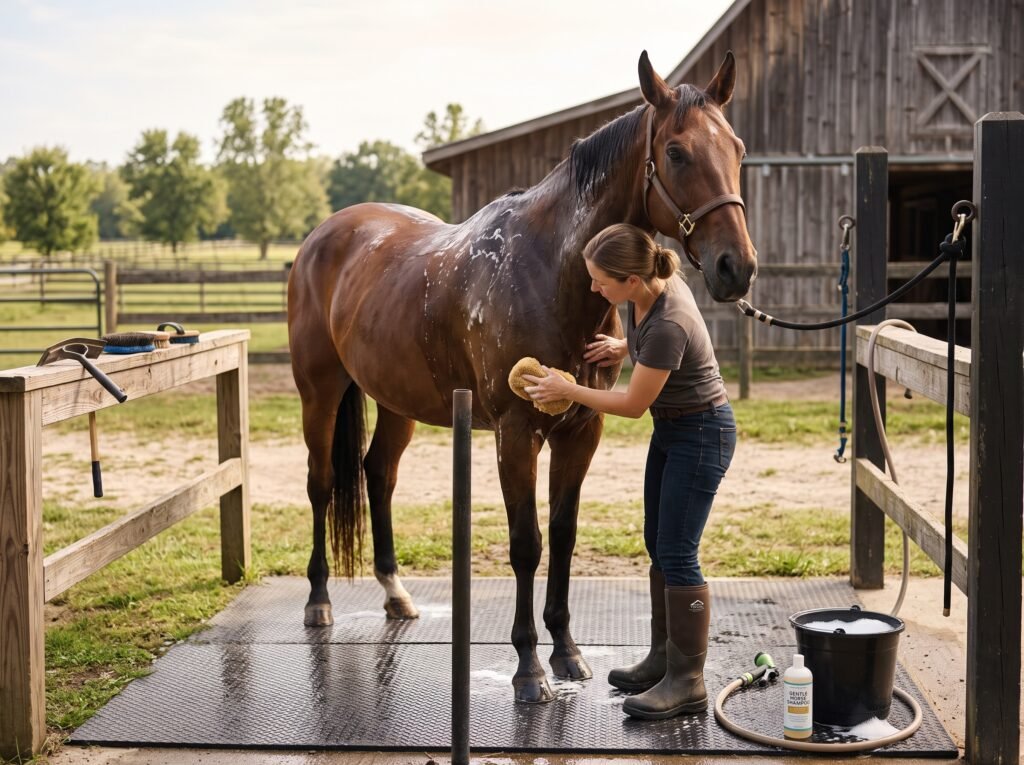
- Fill a clean five-gallon bucket with lukewarm water.
- Add two to three capfuls of equine-specific shampoo.
- Stir until suds begin to form.
- Submerge a large synthetic sponge in the mixture.
- Apply the foam generously over the crest, shoulders, barrel, and hindquarters.
Always follow the shampoo manufacturer’s dilution instructions.
Step 3: The Deep-Cleaning Scrub
Use a flexible rubber curry mitt or a suitable grooming sponge to remove accumulated dirt and sweat.
Work in gentle circular motions across:
- The neck.
- The shoulders.
- The chest.
- The underside of the barrel, particularly around the girth area.
- The muscular thighs.
Use a softer sponge and clean water around sensitive areas, including the sheath or udder and the inner hind legs.
Step 4: The Tail Bucket Dunk
The tail requires special attention because dirt and debris can become trapped deep within the hair.
Follow these steps:
- Fill a bucket with warm, soapy water.
- Lift the horse’s tail carefully.
- Lower the bottom two-thirds of the tail hair into the bucket.
- Gently swirl the hair through the water to loosen dirt and knots.
- Rinse thoroughly.
- Apply a suitable leave-in conditioner, working from the ends upward.
This technique helps clean the tail while minimizing unnecessary pulling and hair breakage.
Step 5: The Thorough Clear-Water Rinse
Rinsing is one of the most important stages of the entire bathing process.
Start at the top of the neck and work downward in smooth, sweeping movements.
Continue rinsing until the water running off the horse is completely clear, with no visible traces of shampoo or foam.
Why is thorough rinsing important?
Shampoo residue trapped beneath the coat can irritate the skin, causing itching and discomfort. A horse may respond by rubbing its mane, tail, or body against stable walls and other surfaces.
Never rush this stage.
Step 6: Mandatory Sweat Scraping
Once the horse has been thoroughly rinsed, use an ergonomic rubber or flexible metal sweat scraper.
Apply firm, controlled downward strokes across:
- The neck.
- The shoulders.
- The barrel.
- The hindquarters.
Sweat scraping removes excess surface water and helps the coat dry more efficiently.
Pay particular attention to weather conditions. A wet coat can contribute to discomfort in both hot and cool environments.
Step 7: The Cool-Out Walk
After scraping, hand-walk the horse for approximately 15–20 minutes while allowing the coat to dry.
Choose a sunny, sheltered area or a covered arena.
If the weather is cool or windy, use a breathable anti-sweat sheet or an appropriate wool or fleece cooler to help manage moisture and prevent chilling.
Always monitor the horse until it is comfortable and sufficiently dry.
4. Why Human Shampoos Can Harm Equine Skin: Understanding the pH Difference
Many horse owners use human shampoo or household dish detergent because these products are inexpensive and readily available.
However, shampoos are formulated for different skin characteristics, and products designed for human hair may not be suitable for horses.
Human Skin vs. Equine Skin pH
| Skin Type | Approximate pH |
|---|---|
| Human skin | 4.5–5.5 |
| Equine skin | 7.0–7.4 |
Human skin naturally maintains a slightly acidic protective barrier, commonly called the acid mantle.
Equine skin has a different pH profile, generally described as neutral to mildly alkaline.
Using unsuitable or excessively harsh products may remove natural skin oils, leaving the coat and skin dry and irritated.
Choosing the Right Shampoo
For regular horse bathing:
- Choose a shampoo specifically formulated for horses.
- Look for a suitable pH-balanced formulation.
- Avoid excessively harsh detergents.
- Follow the manufacturer’s dilution instructions.
- Rinse thoroughly to remove all product residue.
Selecting the right shampoo helps maintain the horse’s natural skin barrier and overall coat condition.
5. Identifying and Managing Common Equine Skin Conditions
Bathing provides an excellent opportunity to examine the horse’s skin and identify unusual changes.
Some common equine skin conditions include rain rot, sweet itch, scratches, and ringworm.
Common Equine Skin Conditions: Comparison Table
| Skin Condition | Cause | Common Symptoms | Management |
|---|---|---|---|
| Rain Rot (Dermatophilosis) | Dermatophilus congolensis, a bacterial organism. | Raised, painful scabs along the topline, loins, and pasterns. Hair may become matted in clumps. | Keep the horse dry and seek veterinary advice about appropriate antimicrobial treatment. |
| Sweet Itch (Summer Eczema) | Allergic reaction to bites from Culicoides midges. | Intense itching, hair loss around the mane and tail, and repeated rubbing. | Use suitable fly protection, protective sheets, and veterinarian-recommended treatments. |
| Scratches (Mud Fever) | Pastern dermatitis associated with moisture, mud, and skin irritation, sometimes involving infection. | Redness, painful cracks, crusty scabs, and swelling around the lower legs. | Keep affected areas clean and dry and seek veterinary guidance for treatment. |
| Ringworm (Dermatophytosis) | Fungal infection involving organisms such as Trichophyton and Microsporum. | Circular patches of hair loss with scaly or crusty skin. Highly contagious. | Isolate the affected horse, clean shared equipment, and obtain appropriate antifungal treatment. |
Rain Rot
Rain rot is a common skin condition associated with the bacterium Dermatophilus congolensis.
Typical signs include:
- Hard, raised scabs.
- Painful areas along the topline and loins.
- Matted hair that comes away with crusts.
- Raw or irritated skin beneath affected areas.
Keep the horse dry and consult a veterinarian about appropriate treatment options.
Sweet Itch
Sweet itch, also known as summer eczema, is an allergic reaction to the saliva of biting midges from the Culicoides genus.
Affected horses may experience:
- Persistent itching.
- Hair loss around the mane and tail.
- Repeated rubbing against fences and stable walls.
- Irritated or damaged skin.
Management may include fine-mesh fly sheets with belly protection, suitable insect repellents, and reducing exposure during periods of high midge activity.
Scratches or Mud Fever
Scratches, also called mud fever or pastern dermatitis, commonly affect the lower legs.
Signs include:
- Red, inflamed skin.
- Painful cracks.
- Crusty scabs around the heels and pasterns.
- Swelling of the lower legs.
Keeping the affected area clean and dry is important. Severe, painful, or persistent cases require veterinary examination.
Ringworm
Ringworm is a contagious fungal skin infection that can spread between horses and humans.
Common symptoms include:
- Circular patches of hair loss.
- Scaly skin.
- Crusty lesions.
- Gradually expanding affected areas.
Separate the affected horse from others and disinfect shared grooming equipment and tack using an appropriate disinfectant according to its label instructions.
Veterinary guidance is recommended to select an effective antifungal treatment.
6. The Spring Shedding Bath: Accelerating the Seasonal Coat Change
Spring is an excellent time to give your horse extra grooming attention as it sheds its thick winter coat.
A properly performed shedding bath can help remove loose hair and accumulated dirt.
Step-by-Step Spring Shedding Routine
Step 1: Prepare the Coat
Bring the horse into the wash area and perform a thorough preliminary curry-combing session to loosen dry dirt and dead hair.
Step 2: Wet the Horse
Use warm water to thoroughly wet the coat.
Step 3: Apply a De-Shedding Shampoo
Choose a specialized de-shedding shampoo formulated for horses.
Apply according to the manufacturer’s instructions.
Step 4: Use a Rubber Curry Mitt
While the coat is covered in shampoo, gently work over the horse with a rubber curry mitt or flexible silicone grooming glove.
The suds provide lubrication, helping the grooming nodules remove loose winter hair without unnecessary pulling.
Step 5: Rinse and Dry
Rinse the horse thoroughly, remove excess water with a sweat scraper, and allow the coat to dry.
A suitable high-velocity equine dryer may also be used when appropriate.
Conclusion: Respecting Your Horse’s Skin Barrier
A successful bath should leave your horse feeling clean, comfortable, and refreshed—not irritated, excessively dry, or shivering.
By preparing the wash bay properly, choosing suitable equine shampoos, using appropriate bathing techniques, rinsing thoroughly, and paying attention to the horse’s skin condition, you can turn an ordinary grooming routine into an important part of preventative care.
Remember that every horse has individual needs. Adjust your bathing routine according to the season, activity level, skin condition, and personal sensitivity of your horse.
A clean, healthy coat begins with good grooming practices, careful observation, and respect for your horse’s natural skin barrier.
- The Jockey Club – Thoroughbred registration, pedigree information, and industry resources.
- Retired Racehorse Project – OTTB retraining, aftercare, and second-career opportunities.
- Merck Veterinary Manual – Veterinary information covering equine health and care.
- American Association of Equine Practitioners (AAEP) – Professional equine veterinary resources.

Equestrian Journalist & Equine Welfare Specialist
Sarah Mitchel brings over fifteen years of hands-on equine management, classical dressage training, and veterinary wellness reporting to Horse Silk. Dedicated to promoting ethical horsemanship, pedigree preservation, and science-backed care protocols.
