

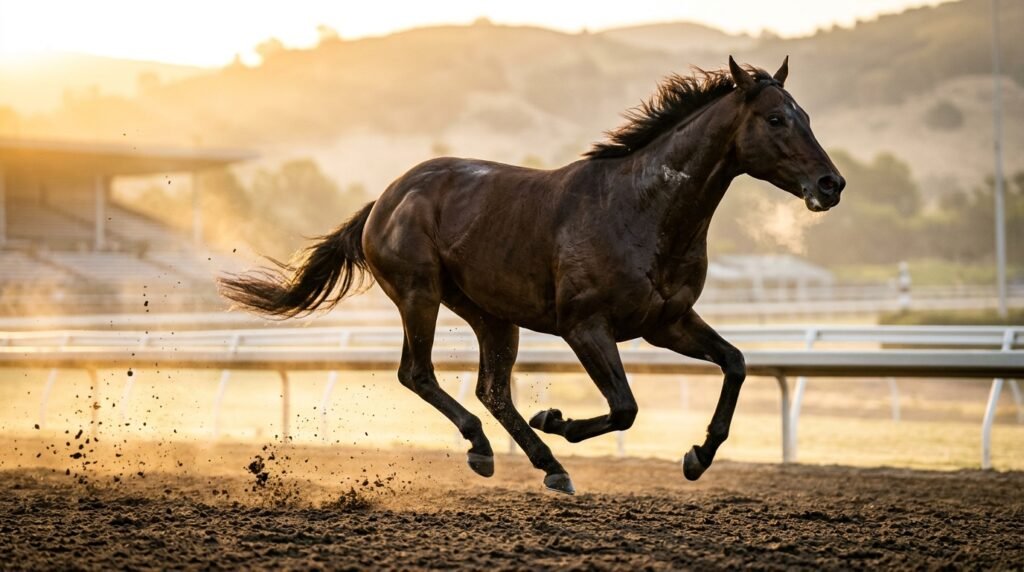
# The American Quarter Horse: America’s Most Popular Equine Legend
No equine breed on earth commands as widespread adoration, commercial prominence, or sheer numerical dominance as the American Quarter Horse. With over six million registered animals spanning more than fifty nations under the auspices of the American Quarter Horse Association (AQHA), this muscular, level-headed athlete represents the quintessential heartbeat of Western equestrian heritage.
From the historic match races of colonial Virginia to the dust-choked roundups of the Texas Panhandle, and from multi-million-dollar reining arenas to serene suburban trail networks, the Quarter Horse has continually reinvented itself without ever relinquishing its core virtue: unshakeable versatility paired with explosive athletic power.
Whether you are an aspiring horse owner seeking your first reliable trail mount or a seasoned trainer evaluating champion foundation pedigrees, this authoritative guide uncovers the history, anatomical conformation, genetic considerations, and day-to-day management of the world’s favorite horse breed.
1. The Quarter-Mile Sprint: Origins of America’s First Native Breed
The genesis of the American Quarter Horse predates the founding of the United States. During the early 1600s, British settlers arriving in Virginia and the Carolinas encountered Native American horses derived from early Spanish stock—descendants of Barb, Andalusian, and Iberian horses brought by Spanish explorers and traders. These colonial horses, particularly those bred by the Chickasaw tribe, were compact, remarkably agile, extremely tough, and deeply accustomed to rugged frontier terrain.
English colonists possessed a fervent passion for horse racing; however, clearing extensive two-mile or four-mile turf courses in dense virgin forests proved impractical. Instead, early pioneers cleared straight paths through woods and along village main streets, creating standardized sprint tracks of a quarter-mile (approximately 440 yards, or 402 meters).
To dominate these short-distance sprint contests, breeders crossed hardy Chickasaw mares with imported British Thoroughbreds. The most pivotal sire in this formative period was Janus, a grandson of the Godolphin Arabian imported to Virginia in 1756. Janus imparted astonishing power, a low, ground-skimming sprinting stride, and thick muscular hindquarters capable of unleashing explosive acceleration from a dead standstill.
These sprinters became known colloquially as “Quarter Pathers” or “Quarter Horses.” Clocked at speeds exceeding 55 miles per hour (88.5 km/h) over short bursts, they defeated European racing thoroughbreds in short-distance sprint duels, earning a permanent reputation as the fastest sprinters in the animal kingdom.
2. Heading West: The Birth of the Ranch Working Horse
As American settlers moved westward across the Great Plains and into Texas, California, and the Southwest during the 19th century, the Quarter Horse faced a radical transformation. The sprint-racing aristocrat of colonial tidewaters was drafted into service as an essential working partner on vast cattle empires.
Ranchers required a horse with distinct attributes:
- Exceptional stamina under grueling desert and prairie heat.
- An unflappable temperament unbothered by rattlesnakes, sudden gunfire, or howling coyotes.
- A low center of gravity enabling instantaneous 180-degree turns.
- “Cow Sense”—an instinctive, predatory-like ability to anticipate, out-maneuver, and control aggressive cattle.
The Quarter Horse thrived in this unforgiving environment, establishing itself as the indispensable companion of the American cowboy. When the American Quarter Horse Association was officially founded in Fort Worth, Texas, in 1940, it formalized the registry to preserve the functional working traits, sprint athleticism, and gentle disposition of this American icon. The very first registration number—AQHA #1—was awarded to the legendary stallion Wimpy, recognized for his impeccable conformation and classic working type.
3. Conformation: The Anatomy of Explosive Acceleration
The American Quarter Horse possesses an unmistakable physical silhouette. Every muscle group, bone angle, and joint articulation is naturally engineered for balance, stability, and rapid momentum shifts.
       [ Refined Head / Wide Forehead / Alert Fox Ears ]
                         |
           [ Clean Throat-Latch & Low-Tied Neck ]
                         |
      [ Broad, Muscular "V" Chest & Well-Sprung Ribs ]
                         |
            [ Short, Strong Couplings & Back ]
                         |
  [ Massive, Heavy-Muscled Gaskins & Powerful Rounded Hip ]
                         |
    [ Low-Set Hocks, Clean Cannons & Durable, Low Hooves ]
Key Conformation Benchmarks:
- Height: Typically ranges from 14.2 to 16.2 hands (58 to 66 inches / 147 to 168 cm). Working and cutting horses tend to stand more compact (14.2 to 15.1 hands), whereas English hunter-type Quarter Horses frequently reach 16.0 to 16.3 hands.
- Weight: Between 1,000 and 1,300 lbs (450 to 590 kg), reflecting a substantially higher muscle-to-bone ratio than lighter saddle breeds.
- The Head and Neck: A relatively short, clean-cut head featuring a wide forehead, prominent, kind eyes, and small, alert ears. The throat-latch must be clean to permit free breathing when the horse flexes its neck during complex maneuvers. The neck ties into deep, sloping shoulders (ideally angled at 45 to 50 degrees).
- The Back and Barrel: A short back and strong loin coupling provide immense spinal rigidity, enabling the horse to carry heavy riders and stock saddles across rough topography without developing premature lordosis or kissing spines.
- The Powerhouse Hindquarters: The hallmark of the breed is its massive, rounded hindquarter. The croup slopes gently into a deep, heavy quarter muscle, with thick, double-muscled inner and outer gaskins. When a Quarter Horse engages its hind end, its hocks sink deep beneath its mass, functioning like coiled steel springs.
Distinct Modern Sub-Types:
Over decades of competitive specialization, the Quarter Horse breed has diversified into distinct sub-types:
- The Foundation / Stock Type (“Bulldog Type”): Compact, heavily muscled, shorter in stature (14.2 to 15.0 hands), featuring pronounced jawlines and exceptionally quick footwork. Ideal for ranch work, roping, and cutting.
- The Cutting & Reining Athlete: Highly athletic, supple, slightly lighter through the front end to allow swift, lightning-fast pivot rotations over the haunches.
- The Racing Sprint Type: Taller, more leggy, displaying heavier Thoroughbred influence. Designed exclusively for maximum velocity across 220 to 870 yards on sanctioned tracks.
- The Hunter / English Under Saddle Type: Elegant, long-strided, standing 16.0+ hands with flatter movement suited for English pleasure, hunt seat, and stadium jumping.
- The Halter Type: Emphasizes exaggerated muscularity, wide chests, and sculpted definition, shown primarily in in-hand conformation competitions.
4. The Magic of “Cow Sense”: Intuitive Equine Intelligence
Perhaps no mental characteristic distinguishes the Quarter Horse more emphatically than “Cow Sense” (el sentido de la vaca). While nearly any horse can be trained to chase livestock, a horse with authentic cow sense reads the body language of a heifer or steer independently of rider cues.
+--------------------------------------------------------------------------+
|                     HOW COW SENSE MANIFESTS IN ACTION                    |
+--------------------------------------------------------------------------+
|  1. Eye Lock:     The horse locks its gaze onto the target bovine,       |
|                   matching its every twitch and micro-movement.          |
|  2. Drop:         The horse drops its chest low to the dirt, lowering    |
|                   its center of gravity into a feline athletic crouch.   |
|  3. Anticipation: When the cow feints left, the horse mirrors the cut    |
|                   before the cow can take half a stride.                 |
|  4. Slack Reins:  In championship cutting events, the rider places two   |
|                   hands on the saddle horn, yielding total tactical      |
|                   control of the maneuver to the horse's instincts.      |
+--------------------------------------------------------------------------+
In sanctioned National Cutting Horse Association (NCHA) events, riders are penalized if they use the reins to guide the horse once a cow is isolated from the herd. The Quarter Horse must out-think, out-step, and out-maneuver the cow purely on natural predatory instinct and extensive conditioning.
5. Legendary Foundation Bloodlines & Historic Sires
Every modern Quarter Horse carries a lineage traceable to a small constellation of patriarch stallions whose genetic prepotency shaped the breed:
- Peter McCue (foaled 1895): Universally acknowledged as the premier foundation sire of modern Quarter Horses. Although originally registered as a Thoroughbred, pedigree analysis proved his sire was the Quarter sprinter Dan Tucker. Peter McCue stamped his progeny with heavy bone, sprint speed, and an unflappable brain.
- Traveler (foaled ca. 1885): A mysterious workhorse of unknown breeding that hauled a dirt scraper on Texas railroad roadbeds before his explosive speed was discovered. He founded legendary ranching and racing dynasties.
- Joe Hancock (foaled ca. 1923): Renowned for producing massive, bone-dense ranch and roping horses with enormous hooves, exceptional durability, and speed.
- King P-234 (foaled 1932): Considered the archetype of the ideal modern Quarter Horse. King sired generations of versatile performers with gorgeous heads, refined throats, and unmatched agility.
- Poco Bueno (foaled 1944): A son of King P-234, Poco Bueno became a cutting champion and immortal sire whose offspring dominated cutting and halter competitions throughout the mid-20th century.
- Doc Bar (foaled 1956): The stallion that single-handedly revolutionized the sport of cutting. Standing only 14.3 hands with an exceptionally pretty head and cat-like agility, Doc Bar transformed cutting horses from raw working cow horses into world-class precision athletes.
6. Color Genetics: The Dazzling Spectrum of AQHA Coats
The AQHA officially recognizes seventeen distinct coat colors, reflecting one of the most genetically diverse color palettes in the equine realm:
[ Solid Base Coats ] ------> Sorrel (most common), Chestnut, Black, Brown, Bay
[ Dilution Colors ] -------> Palomino, Buckskin, Cremello, Perlino, Smoky Cream
[ Dun Spectrum ] ----------> Classic Dun, Red Dun, Grullo (Slate Dun)
[ Modifiers & Patterns ] --> Red Roan, Blue Roan, Bay Roan, Gray
- Sorrel vs. Chestnut: The AQHA differentiates between reddish-copper bodies with flaxen or matching manes (Sorrel) and darker liver-red bodies (Chestnut). Sorrel is statistically the most prevalent coat color in the breed.
- Grullo: A rare and striking dun dilution on a black base coat, characterized by a smoky mouse-gray body, black points, and primitive dorsal and zebra leg stripes.
- White Markings & Excessive White: Historically, the AQHA enforced a strict “white rule” prohibiting horses with excessive body white. Today, with advancements in parentage DNA verification, horses displaying white patches beyond traditional face blazes and leg socks can be registered provided both parents are AQHA certified, opening the stud book to striking “cropout” patterns.
7. Crucial Genetic Health Considerations: The 6-Panel Test
Because modern Quarter Horses trace back to intensely linebred foundation sires, genetic anomalies have emerged over recent decades. Responsible breeding programs and discerning prospective buyers rely on mandatory 6-Panel Genetic Testing to identify carrier status prior to mating:
| Genetic Condition | Acronym | Mode of Inheritance | Clinical Presentation & Management |
|---|---|---|---|
| **Hyperkalemic Periodic Paralysis** | **HYPP** | Autosomal Dominant (Incomplete) | Traces exclusively to the prolific halter stallion **Impressive**. Causes a defect in sodium channel gates, leading to muscle tremors, weakness, severe collapse, or fatal cardiac arrest. Manageable via low-potassium diets (avoiding alfalfa/molasses). Homozygous (H/H) horses are barred from AQHA registration. |
| **Polysaccharide Storage Myopathy (Type 1)** | **PSSM1** | Autosomal Dominant | Causes muscle cells to accumulate abnormal glycogen and sugar chains, resulting in chronic tying-up (*exertional rhabdomyolysis*), stiffness, and pain. Managed effectively through high-fat, low-carbohydrate diets and daily turnout exercise. |
| **Hereditary Equine Regional Dermal Asthenia** | **HERDA** | Autosomal Recessive | Traces back to Poco Bueno. Affects collagen synthesis, causing skin along the back and neck to stretch, tear, and slough away when saddle pressure is applied. Typically surfaces under saddle training at age two. Carrier (N/HRD) horses show no symptoms; breeding two carriers risks producing an affected foal (HRD/HRD). |
| **Glycogen Branching Enzyme Deficiency** | **GBED** | Autosomal Recessive | A fatal condition preventing heart and muscle tissues from properly storing energy. Foals usually abort late-term or die within weeks of birth. Genetic testing prevents carrier-to-carrier matings. |
| **Malignant Hyperthermia** | **MH** | Autosomal Dominant | A severe metabolic disorder triggered by halothane anesthesia, intense stress, or extreme exertion, leading to hyperthermia, muscle rigidity, and tachycardia. |
| **Immune-Mediated Myositis** | **IMM** | Co-Dominant | Characterized by rapid, dramatic loss of top-line muscle mass (often within 48 to 72 hours) following systemic immune triggers such as Streptococcus equi infections or vaccines. Responsive to early corticosteroid intervention. |
8. Nutritional Requirements & Daily Management
Managing an American Quarter Horse requires an understanding of their naturally thrifty, high-efficiency metabolism:
Dietary Guidelines:
- The “Easy Keeper” Phenomenon: Quarter Horses are evolutionary masters of nutrient absorption. Feeding high-starch grain concentrates often leads to obesity, insulin resistance, laminitis, and equine metabolic syndrome (EMS).
- Forage First: Supply high-quality grass hay (timothy, orchard grass, or coastal Bermuda) at 1.5% to 2.0% of body weight daily. Alfalfa should be offered sparingly or blended with grass hay to avoid excess caloric density, unless the horse is undergoing high-performance cutting, reining, or race training.
- Balancing Ration Concentrates: For pleasure mounts and light-working horses, an unfortified forage diet supplemented with a low-intake ration balancer pellet (1 to 2 lbs daily) supplies essential amino acids (lysine, methionine), copper, zinc, and selenium without unneeded calories.
Hoof Care & Conformation Balance:
Quarter Horses are occasionally criticized for possessing small hooves relative to their substantial body mass (e.g., a size 00 or 0 shoe on a 1,200 lb frame). Maintaining an uncompromising 5-to-6-week trimming schedule is mandatory. Proper breakover, heel support, and balanced palmar angles reduce excessive strain on the navicular apparatus, deep digital flexor tendon, and collateral ligaments.
9. Disciplines: Where the Quarter Horse Shines
The versatility of the American Quarter Horse spans an unmatched breadth of athletic disciplines:
- Reining & Working Cow Horse: The dressage of the Western world. Horses execute sliding stops extending 30 feet, rapid 360-degree spins, rollbacks, and flying lead changes at full gallop.
- Rodeo Events: Barrel racing, steer wrestling, calf roping, and team roping rely almost exclusively on the explosive acceleration and quick pivot power of the Quarter Horse.
- Trail & Recreational Riding: Renowned for their calm demeanor and sensible mindset, Quarter Horses remain the gold standard for family trail riding, packing into mountain wilderness, and therapeutic riding programs.
- English All-Around & Jumping: The modern AQHA circuit features thriving classes in Hunter Under Saddle, Working Hunter, and Equitation Over Fences, where taller, free-flowing Quarter Horses compete against traditional European Warmbloods.
- Quarter Horse Racing: Contested across straight quarter-mile courses at legendary venues like Ruidoso Downs, NM, home to the multi-million-dollar All American Futurity.
10. Buyer’s Guide: Market Values, Pedigree Valuation & Inspection
When navigating the Quarter Horse marketplace, prices vary widely based on breeding, training, and intended use:
+--------------------------------------------------------------------------+
|                  AMERICAN QUARTER HORSE PRICE SPECTRUM                   |
+--------------------------------------------------------------------------+
|  Trail / Companion Grade:          $3,000 – $7,500                       |
|  Finished Youth / 4-H All-Around:   $8,000 – $20,000                      |
|  Ranch Versatility / Roping Mount: $12,000 – $35,000                     |
|  Premier Finished Reiner / Cutter: $35,000 – $150,000+                   |
|  Elite Racing Prospect / Futurity: $100,000 – $1,000,000+                |
+--------------------------------------------------------------------------+
Essential Pre-Purchase Checklist:
- Full 6-Panel Genetic Verification: Ensure the horse has documented clean results or that carrier status is fully understood.
- Comprehensive Radiographs (X-Rays): Inspect front hooves (navicular bone and coffin joint), hocks, and stifles for signs of arthritis, bone spavins, or osteochondritis dissecans (OCD).
- Temperament Evaluation: Assess how the horse behaves when saddled, tied, loaded in a trailer, and ridden outside the safety of an arena enclosure.
Conclusion: The Enduring Soul of the Equine World
The American Quarter Horse is more than a registry number; it is an enduring living artifact of equine engineering. By blending the fiery speed of the Thoroughbred with the gritty tenacity of colonial wild stock and the working cow horse of the open range, breeders have sculpted a creature of breathtaking balance, power, and generosity.
Whether sliding to a halt in an international stadium, driving cattle through a snowstorm, or safely carrying a child down a mountain trail, the American Quarter Horse continues to prove why it stands proud as the most celebrated, reliable, and beloved riding horse the world has ever known.
Equestrian Journalist & Equine Welfare Specialist
Sarah Mitchel brings over fifteen years of hands-on equine management, classical dressage training, and veterinary wellness reporting to Horse Silk. Dedicated to promoting ethical horsemanship, pedigree preservation, and science-backed care protocols.
🐎 Recommended Equine Reading & Official Resources
Continue exploring our breed and health archives: discover the Striking Appaloosa Horse Guide and master our veterinary-approved Daily Horse Grooming Routine for a Silky Coat.
For verified international breed registrations and equestrian standards, consult the official American Quarter Horse Association (AQHA).
