

Introduction
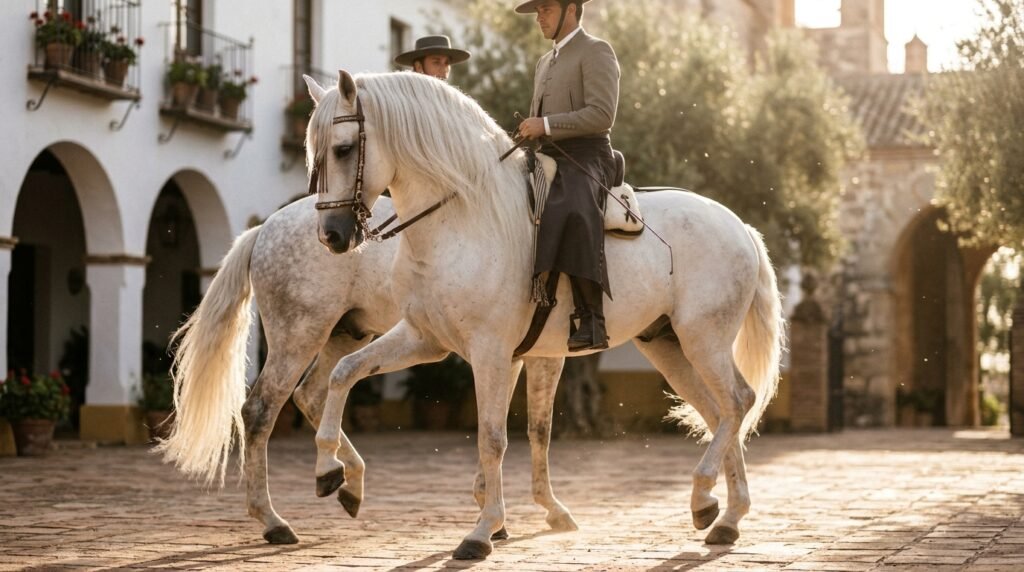
Throughout centuries of European royal history, one horse reigned supreme across royal palaces, battlefield tapestries, and classical equestrian academies: the Andalusian, officially registered worldwide as the Pura Raza Española (P.R.E.), or Pure Spanish Horse.
Revered from the Renaissance through the Enlightenment as the “Horse of Kings,” this magnificent Baroque breed carried monarchs such as King Philip II of Spain and Louis XIV of France. It became a symbol of majesty, courage, and aristocratic elegance.
With its grand arched neck, long flowing mane, muscular shoulders, and intelligent expression, the Andalusian commands attention. Its natural balance, elevated movement, and ability to collect make it particularly suited to classical dressage and the demanding movements of Haute École.
Behind its impressive appearance is a horse known for its warmth, generosity, and sensitivity. In this complete breed guide, we explore the Andalusian’s origins, physical characteristics, coat colors, temperament, training abilities, healthcare, nutrition, and market value.
History and Origins of the Andalusian Horse
The Andalusian has one of the oldest documented equine bloodlines in the Western world. Its history is closely connected to the Iberian Peninsula, particularly southern Spain.
1. Prehistoric Iberian Origins
Ancient cave paintings found in Spain, including those in the caves of Altamira, depict horses with compact bodies, arched necks, and distinctive profiles. These images provide a glimpse into the long history of horses in the Iberian region.
Ancient writers also praised Iberian horses for their agility, courage, and usefulness in warfare.
2. King Philip II and the Royal Stables of Córdoba
In 1567, King Philip II of Spain ordered the establishment of a royal breeding program intended to develop an exceptional Spanish horse.
The Royal Stables of Córdoba, known as the Caballerizas Reales, became an important center for selecting and breeding horses from the Guadalquivir River region.
The breeding program emphasized:
- Strong, surefooted Iberian horses.
- Refined appearance and agility.
- Natural collection and elevated movement.
- Intelligence, trainability, and obedience.
The resulting breed became highly influential in European royal riding schools and equestrian traditions.
3. The Carthusian Monks and the Cartujano Strain
During the Napoleonic Wars in the early nineteenth century, Spanish horse-breeding populations faced considerable disruption.
The Carthusian monks associated with the Monastery of La Cartuja near Jerez de la Frontera helped preserve important Andalusian bloodlines.
Their horses became known as the Cartujano, or Carthusian strain. These horses are especially valued by enthusiasts for their traditional bloodlines, refined appearance, and connection to the history of the Pure Spanish Horse.
Andalusian Horse Characteristics and Conformation
The Andalusian is recognized for its compact, muscular build, elegant head, arched neck, and naturally expressive movement.
The official breed organization, ANCCE, maintains the international studbook and oversees breed registration and evaluation.
Official Breed Conformation Specifications
| Feature | Description |
|---|---|
| Height | Stallions: approximately 15.1 hands minimum; mares: approximately 15.0 hands minimum |
| Head Profile | Straight to slightly convex |
| Eyes | Large, expressive, and alert |
| Neck | Muscular with a naturally arched crest |
| Chest and Shoulders | Deep chest and sloping shoulders |
| Croup and Tail | Rounded, sloping croup with a relatively low-set tail |
| Coat Colors | Grey, bay, black, chestnut, and other recognized colors |
1. The Head and Noble Profile
The Andalusian has a medium-length, elegant head with a straight to slightly convex profile. Its large, expressive eyes contribute to its distinctive appearance.
The ears are medium-sized and mobile, giving the horse an alert and attentive expression.
2. The Arched Neck and Compact Body
One of the breed’s most recognizable features is its muscular, naturally arched neck.
Its compact body and strong hindquarters help the Andalusian maintain balance and perform collected movements. These physical qualities make it particularly suited to classical dressage.
3. Luxurious Mane and Tail
The Andalusian is famous for its thick, flowing mane and tail. Many horses have naturally wavy hair that adds to their elegant appearance.
The mane and tail are often left long, especially in traditional presentations and breed exhibitions.
Andalusian Horse Coat Colors
Although grey is the most familiar color associated with the Andalusian, the breed can appear in several recognized coat colors.
Common and Recognized Colors
| Coat Color | Spanish Name | Description |
|---|---|---|
| Grey | Tordo | The most familiar color, often changing from dark shades to lighter grey as the horse ages |
| Bay | Castaño | Reddish-brown body with black mane, tail, and lower legs |
| Black | Negro | Deep black coat with a striking appearance |
| Chestnut | Alazán | Reddish or copper-colored coat |
| Palomino | Palomino | Golden coat with a lighter mane and tail |
| Buckskin | Bayo | Golden or tan body with darker points |
Grey Andalusians are particularly recognizable because many are born darker and gradually become lighter as they mature.
Classical Dressage and Haute École
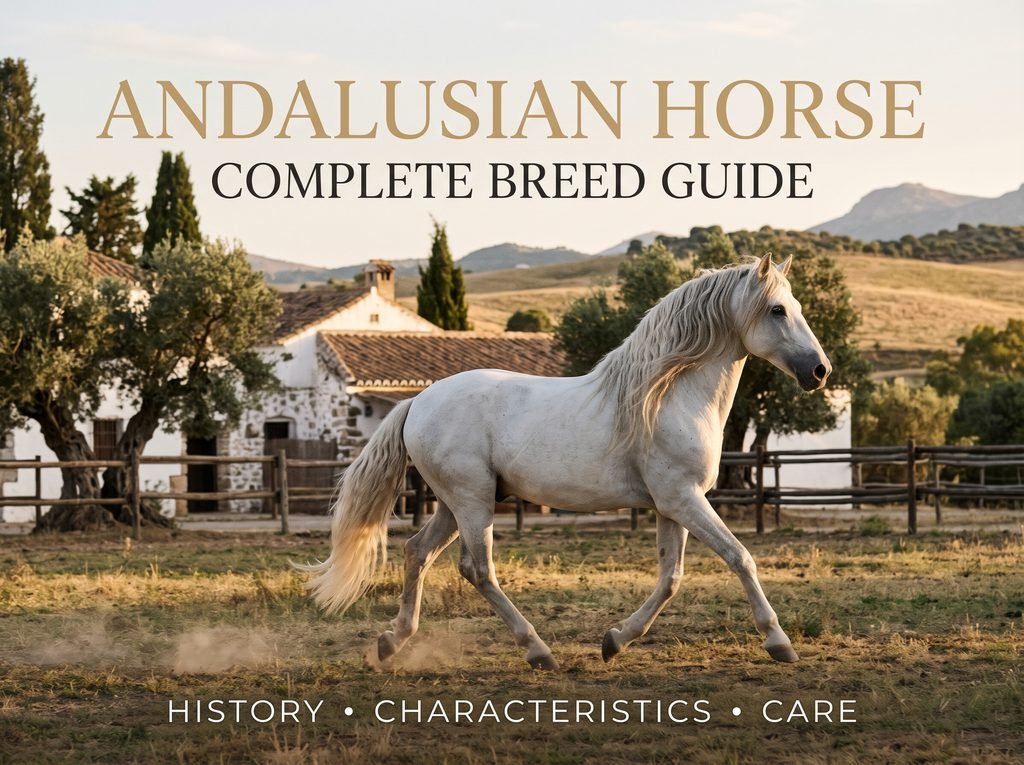
The Andalusian is especially admired for its ability to perform collected movements and classical dressage exercises.
Its strength, balance, and natural athleticism make it well suited to movements that require controlled power and precision.
Famous Classical Dressage Movements
| Movement | Description |
|---|---|
| Piaffe | A highly collected trot performed almost in place |
| Passage | An elevated, slow, rhythmic trot with suspension |
| Spanish Walk | A controlled walk with exaggerated front-leg extension |
| Levade | A demanding movement in which the horse raises its forehand while balancing on bent hind legs |
| Courbette | A series of forward jumps performed on the hind legs |
| Capriole | A powerful leap in which the horse kicks out with its hind legs |
These movements require extensive training, strength, coordination, and trust between horse and rider.
Andalusian Horse Temperament and Personality
The Andalusian is admired not only for its beauty but also for its temperament.
The Meaning of Brio
The Spanish word brio describes the horse’s spirit, courage, energy, and pride. In the Andalusian, these qualities are traditionally associated with responsiveness and emotional control.
Gentle and Trainable Nature
Many Andalusians are known for their willingness to work and their ability to develop strong relationships with their handlers.
Their intelligence and sensitivity can make them responsive riding partners, although individual temperament varies according to breeding, training, and handling.
Loyalty and Generosity
The breed is often described as affectionate and people-oriented. With consistent, patient training, an Andalusian can become a confident and reliable partner.
Andalusian Horse Health, Nutrition, and Care
Like every horse breed, Andalusians need appropriate nutrition, regular exercise, veterinary attention, and preventive care.
Their feeding program should be based on age, body condition, workload, and individual metabolic needs.
1. Managing Weight and Metabolic Health
Some Andalusians are efficient feeders and may gain weight easily when given excessive calories.
Owners should:
- Monitor body condition regularly.
- Avoid unnecessary high-sugar feeds.
- Provide suitable forage.
- Adjust feeding according to exercise and workload.
- Consult an equine nutritionist or veterinarian when metabolic problems are suspected.
Excess weight can increase the risk of metabolic disorders and laminitis.
2. Melanomas in Grey Horses
Grey horses have an increased tendency to develop melanomas as they age.
Owners should regularly check areas such as:
- Under the tail.
- Around the throat and jaw.
- Near the lips.
- Around the external genital area.
A veterinarian should examine unusual lumps or changes in the skin.
Andalusian Horse Price and Buying Guide
The price of an Andalusian depends on its age, pedigree, training, competition record, conformation, and registration status.
The following figures are indicative estimates rather than guaranteed market prices.
Average Andalusian Horse Prices
| Horse Category | Estimated Price Range | Main Considerations |
|---|---|---|
| Foal or Yearling | $10,000–$22,000 | Pedigree, registration, and bloodlines |
| Basic Riding Horse | $18,000–$35,000 | Training and riding suitability |
| Dressage Prospect | $35,000–$80,000 | Training level and competition potential |
| Qualified Breeding Stock | $60,000–$200,000+ | Breeding evaluation and pedigree |
| Grand Prix Dressage Horse | $150,000–$500,000+ | Competition record and advanced training |
What Is ANCCE Registration?
ANCCE is the official Spanish breed organization responsible for the Pure Spanish Horse studbook.
When purchasing an Andalusian, buyers should verify the horse’s identification documents, registration, pedigree, and ownership records.
A proper veterinary examination before purchase is also strongly recommended.
Frequently Asked Questions About Andalusian Horses
What Is the Difference Between an Andalusian and a Lusitano?
Both breeds share Iberian ancestry, but they are associated with different countries and breed organizations.
| Feature | Andalusian (P.R.E.) | Lusitano (P.S.L.) |
|---|---|---|
| Country of Origin | Spain | Portugal |
| Breed Organization | ANCCE | APSL |
| Traditional Uses | Classical dressage and riding | Dressage, working equitation, and traditional bullfighting |
| Appearance | Often slightly straighter profile | Often more convex facial profile |
Can Andalusian Horses Jump?
Yes. Andalusians can jump and participate in disciplines such as working equitation and recreational show jumping.
However, horses bred specifically for high-level show jumping may have physical characteristics better suited to that discipline.
How Can You Tell If an Andalusian Horse Is Authentic?
Check its official identification documents, microchip, registration, and pedigree.
For a registered Pure Spanish Horse, buyers should verify its details through the official ANCCE studbook and consult the relevant breed authority.
How Long Do Andalusian Horses Live?
With appropriate nutrition, exercise, veterinary care, and management, Andalusian horses can often live into their twenties, with some reaching 30 years or more.
Andalusian Horse Breed Summary
| Feature | Specification |
|---|---|
| Official Breed Name | Pura Raza Española (P.R.E.) |
| Common Name | Andalusian Horse |
| Country of Origin | Spain |
| Main Historical Region | Andalusia and Córdoba |
| Official Registry | ANCCE |
| Average Height | Approximately 15.1–16.3 hands |
| Average Weight | Approximately 1,050–1,300 lbs |
| Common Coat Colors | Grey, bay, black, and chestnut |
| Distinctive Features | Arched neck, muscular body, flowing mane, and elevated movement |
| Main Disciplines | Classical dressage, Haute École, working equitation, and driving |
| Average Lifespan | Approximately 25–30+ years |
Final Thoughts
The Andalusian horse is one of the most recognizable and historically important horse breeds in the world. Its royal heritage, elegant appearance, intelligence, and natural talent for classical dressage have made it a favorite among equestrians for centuries.
Whether admired in a traditional riding exhibition, trained for dressage, or enjoyed as a riding companion, the Pure Spanish Horse continues to represent the beauty and tradition of Spanish horsemanship.
Equestrian Journalist & Equine Welfare Specialist
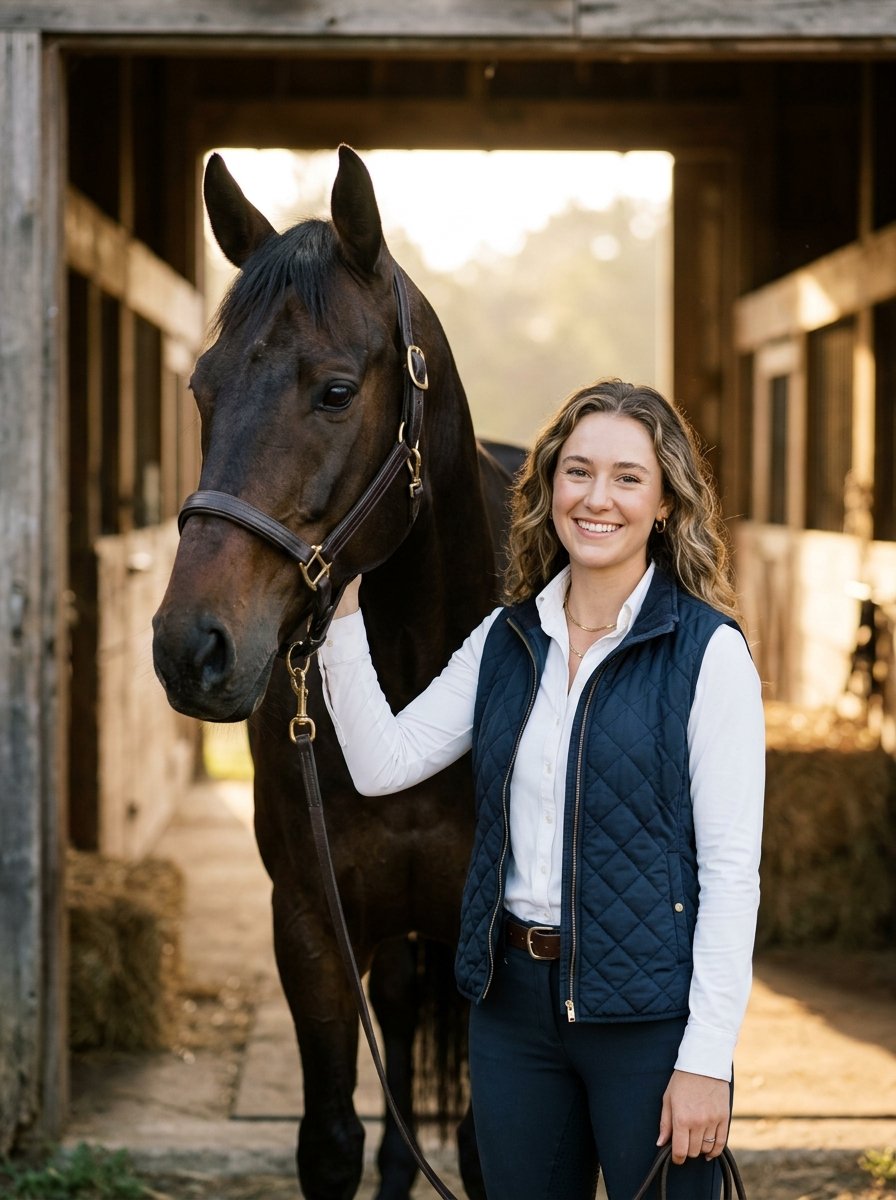
Sarah Mitchel brings over fifteen years of hands-on equine management, classical dressage training, and veterinary wellness reporting to Horse Silk. Dedicated to promoting ethical horsemanship, pedigree preservation, and science-backed care protocols.
