

Introduction
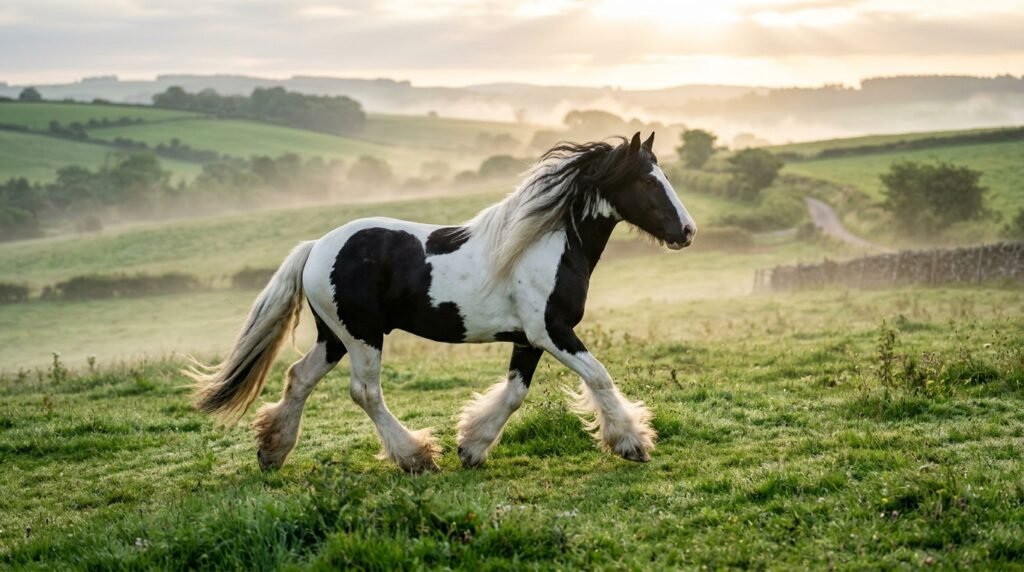
With a majestic, ground-skimming cascade of silky white leg feathering, a mane so thick and luxuriant it spills like a heavy woolen blanket over muscular shoulders, and an eye so sweet and tranquil it instantly disarms the most cautious observer, the Gypsy Vanner horse looks as though it stepped directly from the pages of an ancient Celtic fairytale. Known variously throughout the British Isles and Europe as the Irish Cob, Coloured Cob, or Traditional Gypsy Cob, this extraordinary breed represents one of the equestrian world’s greatest breeding triumphs of the twentieth century.
🐎 Gypsy Vanner Horse Quick Fact Sheet
For decades, the existence of this refined draft-type horse remained one of Europe’s best-kept secrets. Bred exclusively by nomadic Romani Travelers across England, Ireland, and Wales, the Gypsy Vanner was cultivated not merely as a working engine to pull ornately carved wooden living caravans (vardos), but as a cherished family guardian, gentle enough to be handled by toddlers yet strong and sound enough to pull heavy loads for days over cobblestones and muddy rural lanes without losing condition.
Today, the Gypsy Vanner has captured hearts worldwide, evolving from a humble caravan traveler into one of the most sought-after, viral, and valuable family riding and therapy breeds in North America, Europe, and Australasia. In this definitive guide, we uncover the fascinating oral history of Romani breeding selection, the unique genetics behind that legendary leg feathering, the essential protocols for maintaining skin and feather health, and what prospective owners must know before bringing one of these magnificent equines into their barn.
The Secret Heritage: Romani Travelers and the Quest for the Perfect Caravan Horse
Unlike European warmbloods or Thoroughbreds, whose ancestries were meticulously documented in aristocratic leather-bound studbooks, the history of the Gypsy Vanner was preserved entirely through unwritten oral lineages passed down around traveler campfires.
The Rise of the Living Wagon (*The Vardo*)
Around the mid-nineteenth century, Romani Travelers in the British Isles transitioned from living in low bender tents to traveling in heavily carved, hand-painted wooden living wagons known as vardos. A fully furnished vardo—complete with brass fittings, cast-iron wood stoves, crystal mirrors, and heavy oak cabinetry—often weighed well over a ton.
A standard agricultural draft horse (such as an eighteen-hand Shire or Clydesdale) was too massive and consumed far too much grain to be practical on the road. Conversely, lightweight carriage horses lacked the bone density, calm temperament, and pulling power needed to ascend steep hills in rainy weather. The Travelers set out to synthesize a totally bespoke horse: a “caravan horse” (vanner) possessing:
- Compact height (14 to 15.2 hands) for easy harnessing by women and children.
- Short, powerful backs and heavy draft bone to pull heavy wagons uphill.
- Placid, bombproof temperaments that would not panic amidst roaring motor vehicles, wandering village dogs, or barking children.
- Lavish hair and feathering as a status symbol of wealth and prestige.
The Foundation Genetics
To achieve this ideal, Romani breeders crossed several foundational breeds over generations:
- The Dales Pony and Fell Pony: Contributed strong black hooves, hard bone density, agility, compact stature, and surefootedness on rocky mountain terrain.
- The Clydesdale and Shire: Introduced magnificent size, upright carriage, heavy feathering, and dramatic piebald and skewbald coat patterns.
- The Section D Welsh Cob: Injected fiery, elevated knee and hock action, intelligence, and heart.
World War II accelerated this vision. While the British military requisitioned solid-colored horses (bays, blacks, and chestnuts) for artillery and transport, they routinely rejected brightly patterned “coloured” (piebald and skewbald) horses as too visible to enemy aircraft. Romani breeders seized this opportunity, acquiring foundation stock of exceptional quality and concentrating the iconic pinto genetics.
Defining Breed Standards and Conformation
The Gypsy Vanner Horse Society (GVHS) and international registries maintain strict breed standards to preserve the distinct type established by early Romani breeders.
+-----------------------------------------------------------------------------------+
|                        GYPSY VANNER CONFORMATION MATRIX                           |
+-----------------------------------------------------------------------------------+
| ANATOMICAL REGION     | DESIRED BREED STANDARD                                    |
+-----------------------+-----------------------------------------------------------+
| Height                | 13.2 to 15.2 hands (Divided into Mini, Classic, Grand)    |
| Head & Eye            | Sweet, refined head, flat forehead, kind "sweet" eye      |
| Neck & Shoulder       | Strong, arched, heavily crested neck into sloping shoulder|
| Back & Croup          | Very short-coupled, broad back with deep "apple butt"     |
| Bone Density          | Heavy, flat, substantial cannon bone circumference        |
| Feathering            | Dense, silky hair cascading from knee/hock over hooves   |
| Mane & Tail           | Enormous, double mane, full forelock and long tail        |
+-----------------------------------------------------------------------------------+
1. The Head and Expression
The head should be proportionate and refined, never coarse or clumsy like a commercial meat draft. The forehead is flat, tapering to a soft, mobile muzzle. The eyes are large, set wide apart, and exhibit what breeders call a “kind eye”—radiating calmness, trust, and intelligence.
2. The Body: Short-Coupled with the Iconic “Apple Butt”
A hallmark of true Gypsy Vanner conformation is a remarkably short back that blends seamlessly into a broad, well-muscled croup featuring a pronounced central gutter—affectionately termed the “Apple Butt” or double-muscled croup. This muscular hindquarter provides explosive pushing power from behind, making the horse an effortless draft worker.
3. The Feathering: Anatomy and Science
The hallmark of the breed is its feather—the thick, flowing hair starting at the back of the knees and hocks, cascading down over the fetlocks, pasterns, and completely concealing large, round hooves.
- High-quality feather must feel silky and soft, never coarse, wire-like, or curly like sheep’s wool.
- It begins high up on the leg, wrapping entirely around the cannon bone to form a full bell-like drape.
- This feathering evolved as a natural weather shield, shedding rainwater and mud away from delicate pastern skin during cold British winters.
Coat Colors and Patterns
While black-and-white piebald is the iconic image celebrated in popular culture, Gypsy Vanners exhibit an extraordinary palette of equine genetics:
- Piebald (Black and White Tobiano): The most famous and traditional pattern, featuring large, clean patches of jet-black and pure white.
- Skewbald (Brown/Chestnut and White): Any color other than black combined with white patches.
- Odd-Coloured / Blagdon: A splash or roan pattern where white markings emerge up from the belly, legs, and throatlatch onto a solid base coat.
- Solid Colors: Solid black, rich bay, chestnut, and silver dapple (taffy) with flaxen manes.
- Dilutes: Palomino, buckskin, smoky black, and rare perlino and cremello doubles.
- Heterochromia (Wall Eyes): Blue or partial-blue eyes are common and fully accepted in the breed, often accompanying white facial markings.
The “Golden” Temperament: The Soul of the Breed
While their appearance is striking, owners universally agree that the true magic of the Gypsy Vanner lies inside its mind.
+-----------------------------------------------------------------------------------+
|                     WHY THE GYPSY VANNER TEMPERAMENT IS UNIQUE                    |
+-----------------------------------------------------------------------------------+
| BEHAVIORAL TRAIT      | REAL-WORLD BENEFIT                                        |
+-----------------------+-----------------------------------------------------------+
| Low Flight Instinct   | Investigates unfamiliar objects rather than bolting       |
| High Emotional Empathy| Automatically matches the confidence level of rider       |
| Willing Work Ethic    | Eager to please; learns complex movements with patience   |
| Tolerance & Patience  | Stands quietly for hours during bathing, clipping, tacking|
+-----------------------------------------------------------------------------------+
Because generations of Romani families lived in close proximity to their tethered horses alongside bustling roads, any animal that kicked, bit, spooked easily, or threatened human safety was instantly cast out. As a consequence, the modern Gypsy Vanner exhibits a cold-blooded, steady, and stoic disposition.
When faced with a strange stimulus (such as a flapping plastic bag or a barking dog), their natural instinct is to plant their hooves, lower their head, and examine the situation calmly rather than bolting in panic. This psychological stability makes them peerless therapy mounts, children’s companions, and amateur-friendly partners.
Versatility: From Sunday Carriage to Classical Dressage
Although initially engineered for draft harness, the Gypsy Vanner’s athletic versatility has surprised the international competitive equestrian community:
1. Classical Dressage
With their natural collection, powerful hindquarter propulsion, and arched necks, Gypsy Vanners make stunning lower-to-mid-level dressage mounts. Their elevated, rhythmic trot and willingness to accept bit contact make them favorites for adult amateurs seeking a flashy, safe mount.
2. Therapeutic Riding and Equine-Assisted Therapy
The broad back, smooth ground-covering walk, and deeply calming emotional presence make Gypsy Vanners ideal therapeutic horses for neurodivergent children, wounded veterans with PTSD, and individuals with physical mobility challenges.
3. Western and Trail Riding
Their surefootedness, brave trail demeanor, and ability to navigate rough terrain without rushing make them luxurious, comfortable trail partners that conquer water crossings, wooden bridges, and steep mountain switchbacks with utter calm.
Feather Care, Grooming, and Health Maintenance
Owning a Gypsy Vanner is a labor of love. That magnificent mane, tail, and feather require dedicated care to prevent skin disease and keep the hair glistening white.
The Battle Against Scratches and CPL
The dense micro-climate beneath heavy leg feathering creates warmth and retains moisture. If neglected, it becomes a breeding ground for fungal and bacterial infections:
- Chronic Progressive Lymphedema (CPL): A genetic condition affecting heavily feathered draft breeds where lymph vessels in the lower legs fail to drain fluid properly. This leads to progressive swelling, skin folds, and chronic secondary infections. Managing CPL requires keeping feather clean, dry, and performing regular anti-parasitic treatments.
- Mallenders and Sallenders: Hyperkeratosis producing thick, scaly, scab-like plaques in the bends of the knees (mallenders) and hocks (sallenders). Regular application of salicylic acid ointments and mineral oil keeps the skin supple and prevents painful cracking.
The Essential Feather Care Routine
- Never Wash Too Frequently: Excessive shampooing with harsh detergents strips natural sebum oils, drying out the skin and causing flaking. Wash only when muddy or preparing for competition.
- The Pig Oil and Sulfur Secret: The traditional British method involves mixing light mineral oil (pig oil) with flowers of sulfur and massaging it into the skin and feather once every 2 to 3 weeks. This creates an impenetrable waterproof barrier that prevents mud from clinging and suffocates feather mites (Chorioptes bovis).
- Mane and Tail Bagging: Keep heavy tails braided and enclosed in breathable tail bags to prevent the horse from stepping on them and tearing hairs.
The Gypsy Vanner Marketplace: Pricing and Valuation
Because purebred Gypsy Vanners are relatively slow breeders with high global demand, they command premium market values:
| Classification | Average Price Range | Characteristics |
|---|---|---|
| Pleasure / Trail Gelding | $8,000 – $18,000 | Well-started under saddle, sound, family-safe, moderate feather |
| Registered Young Prospect (Foal/Yearling) | $10,000 – $22,000 | GVHS registered, exceptional pedigree, heavy foundation bone |
| Trained Performance / Dressage Mount | $20,000 – $45,000 | Confirmed under saddle, show experience, exceptional movement |
| Elite Breeding Stallion / Proven Broodmare | $35,000 – $90,000+ | Champion bloodlines (The Gypsy King, The Lion King lines), massive feather |
Frequently Asked Questions
Are Gypsy Vanners good for tall riders?
Yes. While they typically stand between 14.0 and 15.1 hands, their enormous barrel circumference, deep heart girth, and heavy bone take up a rider’s leg far more than a lanky 16.2-hand Thoroughbred. An adult rider over 6 feet tall looks balanced and comfortable on a 14.2-hand Gypsy Vanner.
Can you clip their feather off?
Physically yes, but within breed purist circles, it is considered sacrilege. Some recreational owners living in persistently wet, muddy climates choose to clip the feather to manage severe skin allergies or mites, but for showing and registration, full natural feathering is mandatory.
How much do Gypsy Vanners eat?
As “easy keepers” descended from hardy British pony and cob blood, Gypsy Vanners have highly efficient metabolisms. They thrive on quality grass hay and clean water, requiring minimal concentrated grain. Overfeeding sugars quickly leads to obesity, laminitis, and metabolic complications.
Breed Card Summary
| Feature | Specification |
|---|---|
| Breed Name | Gypsy Vanner Horse (Irish Cob / Traditional Gypsy Cob) |
| Country of Origin | United Kingdom & Ireland (Romani Travelers) |
| Average Height | 13.2 to 15.2 hands (138 to 158 cm) |
| Average Weight | 1,100 to 1,500 lbs (500 to 680 kg) |
| Primary Coat Colors | Piebald, Skewbald, Blagdon, Solid Black, Bay |
| Key Physical Trait | Massive silky leg feathering, double mane, apple butt |
| Temperament | Cold-blooded, deeply docile, affectionate, unflappable |
| Average Lifespan | 25 to 30 years |
Equestrian Journalist & Equine Welfare Specialist
Sarah Mitchel brings over fifteen years of hands-on equine management, classical dressage training, and veterinary wellness reporting to Horse Silk. Dedicated to promoting ethical horsemanship, pedigree preservation, and science-backed care protocols.
