

Table of Contents
Introduction
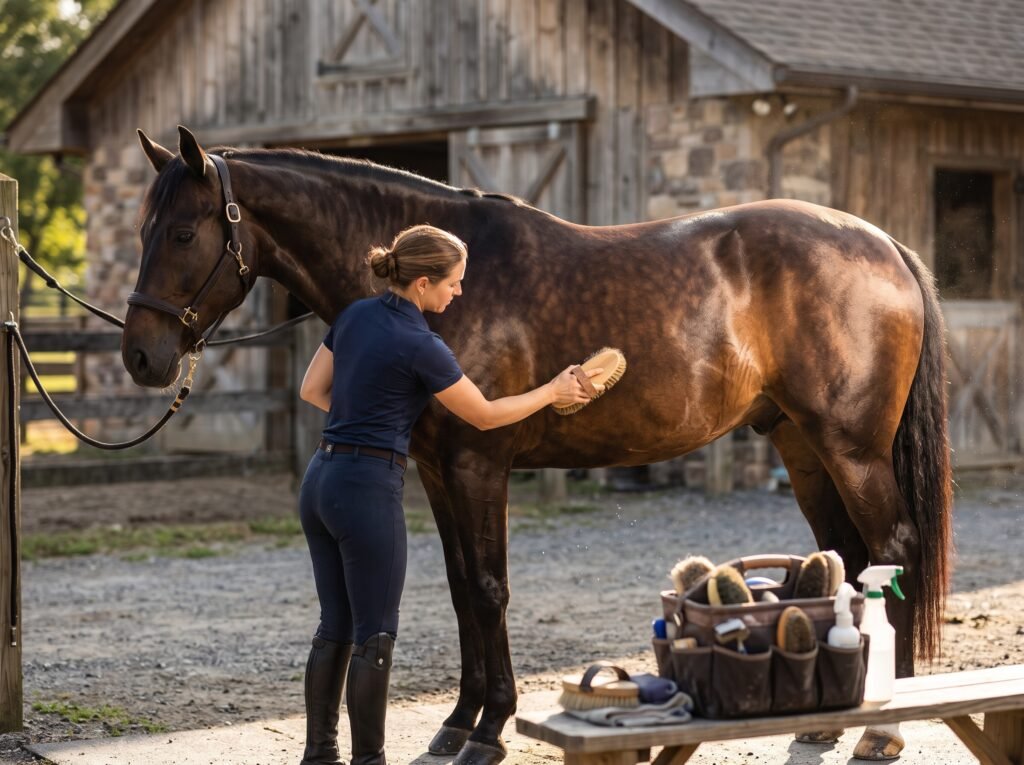
There is nothing quite as breathtaking in the equestrian world as a horse with a deep, glossy, mirror-like coat. Whether under the morning sun or arena lights, a healthy coat highlights the horse’s natural beauty, muscle definition, and overall condition.
However, professional grooms know that a beautiful coat does not happen overnight. It is the result of consistent grooming, the right tools, proper technique, and balanced nutrition.
Daily grooming is also an important part of preventive horse care. It gives owners and handlers an opportunity to identify early signs of heat, swelling, skin irritation, cuts, fungal infections, and muscle soreness before they become more serious problems.
This guide explains a professional step-by-step horse grooming routine, including essential tools, brushing techniques, mane and tail care, nutrition, seasonal grooming, and show-ring finishing tips.
1. The Science Behind a Shiny Horse Coat
To achieve a naturally glossy coat, it helps to understand how horse hair and skin work together.
The Hair Shaft and Cuticle
Each horse hair is covered with microscopic overlapping scales called cuticles. When the coat is clean and healthy, these scales lie relatively flat, allowing light to reflect more evenly.
Dirt, dried sweat, and dead skin cells can make the coat appear dull by disrupting its smooth surface.
Sebaceous Glands and Natural Oils
Sebaceous glands are located near the hair follicles and produce sebum, a natural oily substance that helps condition the skin and hair.
When distributed along the hair shaft, these oils help maintain softness and a healthy-looking shine.
How Grooming Improves Coat Appearance
The main purpose of grooming is to remove dirt, loosen dead skin cells, distribute natural oils, and stimulate the skin through gentle massage.
Regular grooming also helps maintain skin cleanliness and gives you an opportunity to inspect your horse’s body.
2. Essential Horse Grooming Tools
A good grooming kit does not need to be complicated. Choosing appropriate, well-maintained tools is more important than buying a large number of brushes.
The Essential Grooming Kit
| Grooming Tool | Main Purpose |
|---|---|
| Rubber Curry Comb | Loosens dirt, dried sweat, and dead skin cells |
| Dandy Brush | Removes loose dirt and debris |
| Medium Body Brush | Removes remaining dust and smooths the coat |
| Soft Finishing Brush | Gently cleans sensitive areas |
| Hoof Pick | Removes mud, stones, and debris from hooves |
| Metal Curry Comb | Cleans dirt from grooming brushes |
| Wide-Tooth Mane and Tail Comb | Detangles long hair |
| Microfiber Towel | Removes fine dust and buffs the coat |
| Natural Sea Sponge | Cleans sensitive facial areas |
3. Step-by-Step Daily Horse Grooming Routine
Following a consistent grooming order helps ensure that every part of the horse receives attention.
Recommended Grooming Order
- Hoof picking and inspection
- Rubber curry comb
- Dandy brush
- Medium body brush
- Face and sensitive areas
- Final coat buffing
Step 1: Clean and Inspect the Hooves
Always begin by checking the hooves.
Stand beside the horse and run your hand gently down the leg before asking it to lift the foot.
Use a hoof pick to remove packed dirt, stones, and debris. Work carefully around the grooves beside the frog.
Important hoof-care checks:
- Look for loose or damaged horseshoes.
- Check for cracks or unusual changes.
- Notice excessive heat in the hoof.
- Watch for signs of discomfort.
- Check for foul odors or unusual discharge.
A strong, unpleasant smell around the frog can indicate thrush, which should be assessed and treated appropriately.
Step 2: Use the Rubber Curry Comb
The rubber curry comb helps loosen dirt, dried sweat, and dead skin cells.
Use gentle circular movements over larger muscular areas, including:
- Neck
- Shoulders
- Barrel
- Rump
- Thighs
Avoid applying firm pressure over bony areas, the spine, face, joints, and lower legs.
For sensitive areas, use a soft rubber grooming mitt instead.
Step 3: Remove Loose Dirt with a Dandy Brush
After loosening the dirt, use a dandy brush to remove debris from the coat.
Brush in the direction of hair growth using short, controlled strokes.
Pay attention to the neck, shoulders, sides, and hindquarters.
A suitable brush helps remove surface dirt without irritating the skin.
Step 4: Smooth the Coat with a Body Brush
The body brush removes finer dust and helps leave the coat looking cleaner and smoother.
Use long, deliberate strokes in the direction of hair growth.
If you use a metal curry comb to clean the brush, keep it separate from the horse’s skin. Brush bristles can be drawn across the metal teeth to remove collected dirt.
Cleaning the brush regularly prevents dust and debris from being transferred back onto the coat.
Step 5: Clean the Face and Sensitive Areas
The face requires a softer approach than the rest of the body.
Use a soft finishing brush around the forehead, cheeks, and muzzle.
For delicate areas, use a clean, slightly damp sponge.
Use separate clean sponges for the eyes and nostrils to avoid transferring dirt or irritation between areas.
Never brush directly across the eyes or apply unnecessary pressure.
Step 6: Finish with a Microfiber Towel
The final step is to remove any remaining fine dust.
Use a clean microfiber towel or suitable grooming mitt.
Work in the direction of hair growth with gentle, even strokes.
This finishing step helps smooth the coat and improve its natural appearance without relying on excessive grooming products.
4. Mane and Tail Care: How to Prevent Breakage
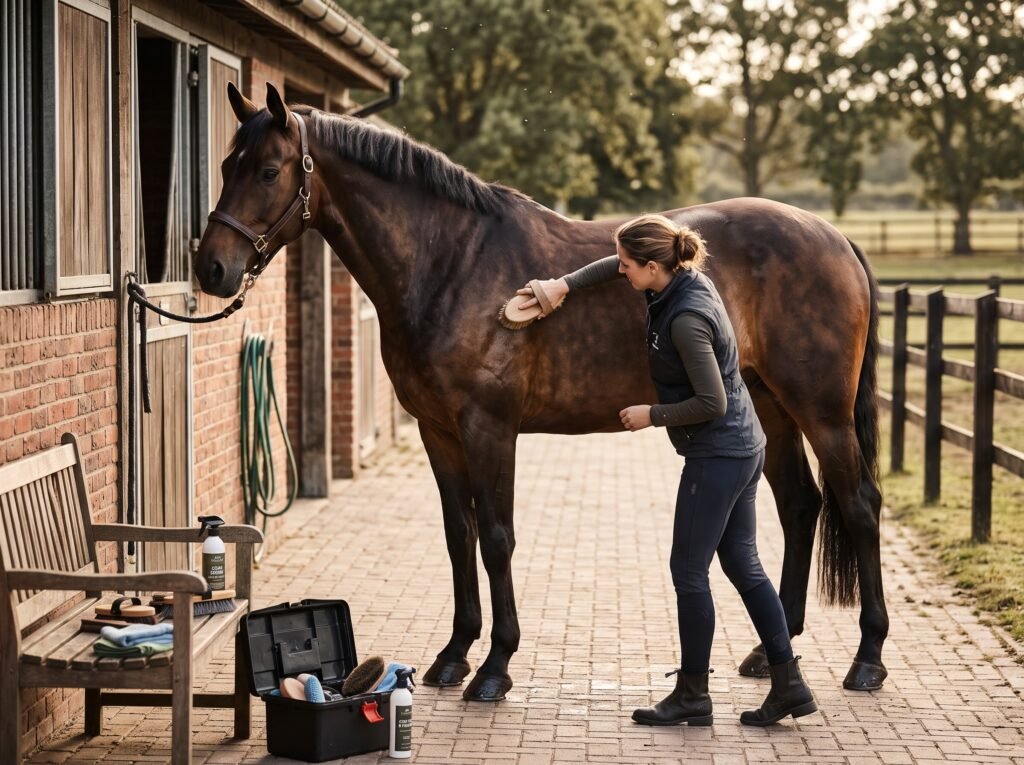
A horse’s mane and tail require gentle handling because long hair can become damaged through excessive brushing and pulling.
Golden Rules for Mane and Tail Care
| Rule | Best Practice |
|---|---|
| Avoid Dry, Forceful Brushing | Never pull aggressively through tight knots |
| Use a Detangler | Apply a horse-safe detangling product when needed |
| Separate Knots by Hand | Gently loosen tangles before using a comb |
| Start at the Bottom | Work from the ends toward the roots |
| Hold the Hair | Support the hair above the knot to reduce pulling |
How to Detangle a Horse’s Tail
- Gather the tail gently in one hand.
- Begin at the bottom ends.
- Separate knots carefully with your fingers.
- Use a wide-tooth comb on small sections.
- Work gradually upward.
- Avoid pulling or forcing the comb through resistant tangles.
Patience is essential. Gentle detangling helps preserve tail length and reduce unnecessary hair breakage.
5. Nutrition for a Healthy and Shiny Coat
External grooming is only one part of coat care. A horse also needs balanced nutrition to maintain healthy skin and hair.
Important Nutrients for Coat Health
| Nutrient | Common Sources | Role in the Body |
|---|---|---|
| Omega-3 Fatty Acids | Flaxseed, chia seeds, camelina oil | Support normal skin function |
| Amino Acids | Quality protein sources, soybean meal | Provide building blocks for hair proteins |
| Biotin | Balanced equine feeds and supplements | Supports normal hoof and tissue health |
| Zinc | Properly formulated mineral feeds | Supports skin and coat health |
| Copper | Balanced mineral supplements | Supports normal pigmentation and connective tissue |
| Clean Water | Fresh drinking water | Supports hydration and normal body functions |
Why Balanced Feeding Matters
Nutritional deficiencies can affect skin condition, hair quality, and hoof health.
A horse’s diet should be adjusted according to its weight, age, workload, and individual needs.
Before adding concentrated supplements, consult an equine veterinarian or qualified equine nutritionist to avoid unnecessary or excessive supplementation.
6. Seasonal Horse Grooming: Spring and Winter Care
Grooming needs change throughout the year. Seasonal adjustments help keep the coat clean and comfortable.
Spring Shedding
As daylight increases, horses naturally begin shedding their winter coats.
Helpful spring grooming practices include:
- Use a suitable shedding tool.
- Groom regularly to remove loose hair.
- Work gently over sensitive areas.
- Groom outdoors when possible.
- Clean grooming tools frequently.
Avoid excessive pressure with shedding blades, particularly over bony or sensitive areas.
Winter Blanket and Coat Care
Horses wearing blankets or rugs may accumulate loose hair, sweat, and dirt underneath.
To maintain coat condition:
- Remove blankets regularly when weather conditions allow.
- Inspect the skin for irritation.
- Brush away loose hair and dirt.
- Make sure blankets are clean, dry, and correctly fitted.
- Check for rubbing around the shoulders and withers.
If bathing is unsuitable in cold weather, use appropriate dry grooming methods rather than soaking the coat.
7. Professional Show-Ring Grooming Tips
Before a competition or show, small finishing details can make a horse look especially polished.
Final Grooming Checklist
| Grooming Detail | Recommended Practice |
|---|---|
| Coat | Remove remaining dust with a clean finishing towel |
| Face | Gently clean the muzzle and around the eyes |
| Mane | Detangle and arrange neatly |
| Tail | Remove knots and loose debris |
| Hooves | Clean thoroughly and use a suitable hoof dressing if appropriate |
| Tack | Make sure equipment is clean and correctly fitted |
Highlighting the Face
Some handlers use small amounts of horse-safe grooming products to enhance the appearance of the muzzle and facial features.
Always choose products intended for horses and follow their instructions. Avoid applying oils or cosmetics near the eyes or other sensitive areas.
Hoof Finishing
A suitable hoof dressing can improve the appearance of the hooves before a show.
Keep products away from sensitive skin and follow the manufacturer’s application instructions.
8. Common Horse Grooming Mistakes to Avoid
Even experienced horse owners can make grooming mistakes that affect skin and coat condition.
1. Over-Bathing with Shampoo
Frequent shampooing can remove natural oils and leave the skin dry.
Bathe only when necessary, using a suitable horse shampoo and following its directions.
2. Brushing Wet Mud
Brushing thick, wet mud can spread dirt through the coat and make cleaning more difficult.
When practical, allow mud to dry before gently removing it with an appropriate grooming tool.
3. Using Dirty Grooming Tools
Dirty brushes can transfer old dirt, sweat, and microorganisms back onto the horse.
Clean grooming tools regularly, allow them to dry completely, and avoid sharing personal grooming equipment between horses without proper cleaning.
4. Applying Too Much Pressure
Aggressive brushing can irritate the skin and cause discomfort.
Use the correct brush for each body area and adjust pressure according to the horse’s sensitivity.
5. Ignoring Skin Changes
Grooming is an opportunity to notice unusual lumps, swelling, wounds, hair loss, or irritation.
Do not ignore persistent changes. Seek veterinary advice when necessary.
Conclusion: The Importance of Daily Horse Grooming
Daily grooming is much more than a beauty routine. It is an essential part of responsible horse care.
Consistent brushing helps remove dirt, maintain coat cleanliness, and provides an opportunity to check the horse’s skin, muscles, and hooves.
Just as importantly, grooming creates a calm daily interaction that can strengthen trust between horse and handler.
A naturally shiny coat is the result of regular care, appropriate nutrition, clean grooming tools, and attention to the horse’s overall well-being.

Equestrian Journalist & Equine Welfare Specialist
Sarah Mitchel brings over fifteen years of hands-on equine management, classical dressage training, and veterinary wellness reporting to Horse Silk. Dedicated to promoting ethical horsemanship, pedigree preservation, and science-backed care protocols.
