

Table of Contents
# Horse Mane & Tail Care: How to Grow Long, Thick Manes & Prevent Breakage
🐎 Equine Hair Care & Growth Protocol
A thick, cascading mane rippling in the wind and a full, floor-sweeping tail are the ultimate crowning glories of equestrian elegance. Whether adorning a fairytale Gypsy Cob, a jet-black Friesian stallion, or an athletic show hunter entering the formal arena, glorious equine hair evokes timeless majesty.
Yet for countless horse owners, achieving and maintaining full, luxurious hair feels like an uphill battle. Snagged paddock fencing, dry winter brittle ends, aggressive brush pulling, and the dreaded midnight “tail-rubbing” habit can destroy years of patient growth in a single night, leaving behind frizzy, broken rat-tails and chewed manes.
While genetics dictate the total number of hair follicles a horse is born with, management, nutrition, and mechanical preservation dictate whether those hairs survive to their maximum biological length. Tail hairs grow at an average rate of merely half an inch per month—meaning a full, ground-length tail represents over four to five years of dedicated preservation.
This master guide reveals the secrets of professional show grooms to stimulate follicle growth, prevent mechanical breakage, utilize tail bags safely, and permanently stop destructive tail rubbing.
Key Nutritional Bio-Building Blocks for Equine Hair Growth
| Nutrient | Biological Mechanism | Target Dietary Source | Daily Equine Dosage |
|---|---|---|---|
| Biotin (Vitamin B7) | Stimulates keratinocyte cell proliferation and strengthens intercellular lipid bonding. | Stabilized flaxseed, alfalfa meal, pure d-biotin supplements. | 20 – 30 mg / day |
| DL-Methionine | Essential sulfur-bearing amino acid providing disulfide cross-links for hair elasticity. | Soybean meal, split peas, dehydrated brewer’s yeast. | 2,500 – 5,000 mg / day |
| Chelated Zinc & Copper | Enzymatic cofactors preventing follicular melanin breakdown and hair shaft brittleness. | Zinc methionine, copper proteinate, whole pumpkin seeds. | Zinc: 400 mg / Copper: 100 mg (4:1 ratio) |
| Omega-3 Fatty Acids (ALA) | Hydrates equine sebum glands, reducing dander and tail-rubbing pruritus. | Cold-pressed flaxseed oil, chia seeds, camelina oil. | 60 – 120 ml / day |
1. The Biology of Equine Hair: Genetics vs. Stewardship
To grow exceptional hair, one must understand how equine hair follicles operate:
[ Anagen Phase: Active Cellular Mitosis & Length Growth (Years) ]
                                |
[ Catagen Phase: Follicle Shrinkage & Transition (Weeks) ]
                                |
[ Telogen Phase: Resting Hair Shaft Retention (Months) ]
                                |
[ Exogen: Natural Shedding as New Anagen Hair Pushes Out ]
- Follicle Density: Breeds like Friesians, Andalusians, Clydesdales, and Morgan horses possess an exceptionally high follicle density per square centimeter along the neck crest and dock. Conversely, Thoroughbreds, Appaloosas, and American Quarter Horses frequently carry genetic variations yielding finer, thinner hair shafts.
- The Tail Growth Timeline: Tail hairs grow at roughly 0.4 to 0.6 inches (1.0 to 1.5 cm) per month. A tail that reaches from the dock to the ground (approximately 40 to 50 inches) requires 4 to 6 years of continuous unbroken survival.
- The Core Groomer’s Truth: You cannot force a follicle to grow ten times faster than its biological programming; but you can prevent the mechanical snapping, pulling, and rubbing that claims 80% of hair before it ever reaches maturity.
2. The 5 Cardinal Rules of Detangling Without Breakage
The primary destroyer of horse hair is not weather, dirt, or mud—it is the human brush. Dragging a standard plastic hairbrush through dry, knot-caked horse hair snaps individual strands like dried spaghetti.
+--------------------------------------------------------------------------+
|                  THE 5 LAWS OF MANE & TAIL PRESERVATION                  |
+--------------------------------------------------------------------------+
|  Law 1: NEVER brush a completely dry, unconditioned tail.                |
|  Law 2: Saturate with a high-grade leave-in silicone or botanical serum. |
|  Law 3: Use your fingers to manually pick apart large knots first.       |
|  Law 4: Use a wide-tooth, seamless wooden or nylon rake comb.            |
|  Law 5: Comb in small 2-inch increments from the BOTTOM UPWARDS.         |
+--------------------------------------------------------------------------+
The Hands-First Technique:
- Apply a palm-sized dollop of silicone-based equine detangler, fractionated coconut oil, or pure argan oil throughout the tail.
- Allow the product to absorb for 2 to 3 minutes to coat the hair cuticles with a slick, friction-reducing boundary layer.
- Gently separate the tail into three or four vertical sections using your fingers. Feel for burrs, stickers, dried mud clumps, or shavings wads, teasing them apart strand by strand.
- The Grip: Wrap your non-dominant hand firmly around the tail section above the knot you are combing. This absorbs all downward mechanical tension in your fist, preventing the comb from pulling hair roots out of the sensitive tail dock.
- Work from the very bottom tips upward in 2-inch steps until the comb glides smoothly with zero resistance.
3. The Tail Bag Regimen: Protection for Ground-Sweeping Length
For horses in muddy turnouts, rough pastures, or preparing for high-level breed competitions, tail bags are the ultimate weapon against breakage and environmental staining.
                  [ Living Coccygeal Tail Bone (Dock) ]
                                    |
          (2 to 3 Inches of Safe Clearance - ZERO TENSION)
                                    |
            [ Loose Three-Strand Braid Down Tail Hair ]
                                    |
         [ Lycra / Ripstop Tail Bag Slips Over Braid ]
                                    |
     [ Bag Ties Threaded THROUGH Braid Strands & Knotted ]
The Life-or-Death Tail Bone Safety Rule:
[!CAUTION]
NEVER attach a braid, rubber band, electrical tape, or tail bag ties around or above the living tail bone!
The equine tail contains living vertebrae (*coccygeal bones*), blood vessels, and spinal nerves. Fastening anything tightly around the dock constricts blood flow. Within hours, ischemic necrosis sets in; within days, the tail bone dies, gangrene develops, and the entire tail sloughs off surgically. Always start braids at least two inches BELOW the physical end of the tail bone.
Step-by-Step Tail Bag Installation:
- Wash & Condition: Shampoo the tail thoroughly, saturate with a deep hydrating leave-in conditioner, and allow it to dry 90% (braiding soaking-wet hair can trap mold spores).
- Plait the Hair: Divide the tail hair below the dock into three equal strands. Plait a loose, clean three-strand braid down to the bottom tips. Secure the tip with an elastic band wrapped over a folded scrap of cloth to prevent rubber friction cutting.
- Slide into Bag: Slip the braided tail into a breathable, 3-tube or 1-tube lycra or water-resistant ripstop nylon tail bag.
- Tie Through the Braid: Thread the attachment ties through the open weaves of the braid (never around the dock) and tie securely in a bow.
- Reset Schedule: Remove the tail bag every 10 to 14 days, wash out accumulated dust, inspect the hair, re-moisturize, and re-braid.
4. Stopping the Nightmare: Why Horses Rub Their Tails & How to Cure It
Nothing breaks an owner’s heart faster than walking into the barn to discover their horse has rubbed the top of their tail dock into a frizzy, bleeding “toilet brush.” Tail rubbing is always a physical symptom of an underlying dermatological or parasitic trigger:
+--------------------------------------------------------------------------+
|                  DIAGNOSTIC CHECKLIST FOR TAIL RUBBING                   |
+--------------------------------------------------------------------------+
|  Culprit 1: Pinworms (*Oxyuris equi*)                                    |
|             Female pinworms crawl out of the rectum to deposit sticky,    |
|             yellowish egg masses around the anus, causing agonizing itch.|
|             -> Remedy: Perform a clear tape test; administer targeted     |
|                anthelmintic (Pyrantel / Fenbendazole) and wash perianal    |
|                skin daily with baby wipes.                               |
|                                                                          |
|  Culprit 2: Dirty Sheath or Udder                                        |
|             Accumulation of waxy, blackened smegma and dry sebum "beans"  |
|             in the urethral fossa creates groin discomfort that horses   |
|             attempt to relieve by rubbing their tails.                   |
|             -> Remedy: Gentle cleaning with warm water and mineral oil.  |
|                                                                          |
|  Culprit 3: Dry, Dandruff-Caked Dock Skin                                |
|             Flaking epidermal scurf at the base of the hair roots.       |
|             -> Remedy: Massage warm coconut oil or tea tree oil serum    |
|                deep into the skin of the dock twice weekly.              |
|                                                                          |
|  Culprit 4: Sweet Itch (Culicoides Midges)                               |
|             Allergic hypersensitivity to biting gnats during dawn/dusk.  |
|             -> Remedy: Fly sheets with full tail flap, permethrin sprays.|
+--------------------------------------------------------------------------+
5. Mane Care: Roaching, Pulling vs. Thinning, and Show Braids
Different equestrian disciplines handle the mane according to historic tradition and functional neatness:
1. Mane Pulling vs. Thinning Shears (Sport Horses & Hunters)
- Traditional Pulling: Involves backcombing the mane to hold a few long hairs and pulling them out by the root using a metal pulling comb wrapped around the fingers. While traditional, it causes severe pain and head-shyness in sensitive horses.
- Modern Thinning Alternative: Astute modern grooms use thinning razors or serrated thinning shears applied to the underside of the crest. This thins the mane down to a tidy, uniform 4-to-5-inch length ideal for hunter or button braids without traumatizing the hair follicles.
2. Preserving Natural Long Manes (Baroque & Western Breeds)
For breeds where flowing manes are prized (Friesians, Andalusians, Morgan horses):
- Never pull or thin.
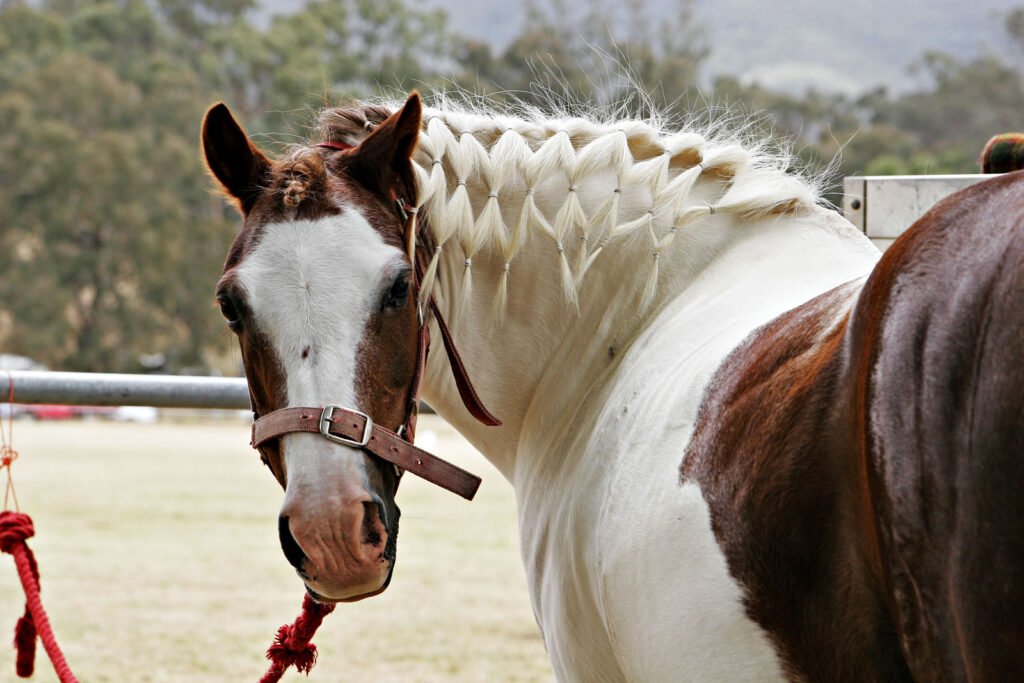
- To prevent the horse from chewing or tangling its mane in pasture fencing, plait the mane into loose pasture braids or a continuous running French braid along the crest.
- Avoid braiding too tightly against the neck, which puts continuous traction on the follicles and causes traction alopecia (permanent hair loss).
6. Nutritional Building Blocks: Feeding Keratin from Within
Hair is 90% keratinized protein. Topical oils provide surface slip, but cellular tensile strength is manufactured in the follicle matrix:
+--------------------------------------------------------------------------+
|                     MANE & TAIL NUTRITIONAL FORMULA                      |
+--------------------------------------------------------------------------+
|  1. Methionine & Lysine: Essential limiting amino acids providing        |
|                          sulfur bridges for dense keratin cross-linking. |
|  2. Biotin (20 mg/day):  Stimulates rapid cellular division in the basal |
|                          matrix of hair follicles.                       |
|  3. Zinc & Copper:       Prevents bleached, reddish, brittle hair tips.  |
|  4. Omega-3 Fatty Acids: (Ground flaxseed / Camelina oil) lubricates    |
|                          sebaceous glands, preventing dry dock dandruff. |
+--------------------------------------------------------------------------+
Feeding 4 to 8 ounces of fresh, stabilized ground flaxseed daily supplies abundant alpha-linolenic acid (ALA), ensuring hair shafts emerge with natural flexibility that resists snapping under environmental strain.
Conclusion: The Reward of Patient Stewardship
Growing an extraordinary mane and tail cannot be achieved overnight with a miracle aerosol spray. It is a slow, methodical journey of everyday habits—the gentle stroke of a wide-tooth rake, the protection of a clean tail bag, the balance of essential amino acids in the feed bucket, and the vigilant prevention of tail rubbing.
When you unbraid that tail and watch thick, glossy waves cascade past the hocks all the way to the arena footing, you know that every minute of patience and devoted care was worth the effort.
Equestrian Journalist & Equine Welfare Specialist
Sarah Mitchel brings over fifteen years of hands-on equine management, classical dressage training, and veterinary wellness reporting to Horse Silk. Dedicated to promoting ethical horsemanship, pedigree preservation, and science-backed care protocols.
📖 Recommended Equestrian Reading & Official References
Deepen your equine mastery with these related guides from Horse Silk and leading equestrian authorities:
- Horse Silk Guide: Complete Horse Nutrition Feeding Guide: Forage, Concentrates & Minerals
- Horse Silk Guide: Ultimate Daily Horse Grooming Routine for a Silky Coat
- Horse Silk Guide: The Majestic Friesian Horse: The Black Pearl of Friesland
- Official Authority: The British Horse Society (BHS) Health & Grooming Guidelines
- Official Authority: American Association of Equine Practitioners (AAEP) Nutritional Care
