

# The American Mustang: Legend of the Wild West, BLM Management & Care
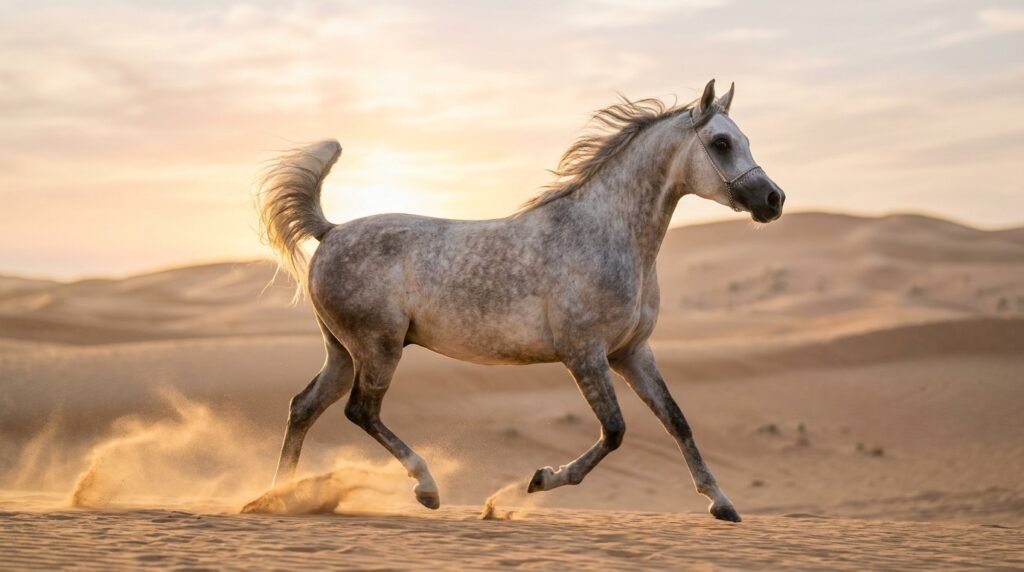
Few creatures embody the raw spirit, romance, and fierce independence of the North American wilderness quite like the American Mustang. Roaming across windswept sagebrush basins, red-rock canyonlands, and rugged mountain plateaus, these feral equines are the living descendants of horses that shaped the history of the Western hemisphere.
Technically categorized as feral horses rather than truly wild species—since their ancestral bloodlines trace back to domesticated mounts brought across the Atlantic—the Mustang has spent centuries undergoing intense natural selection. Nature has sculpted them into models of physical efficiency: endowed with iron-hard hooves, uncanny environmental intelligence, and an unwavering herd hierarchy.
From the Spanish conquistadors to modern federal protection under the Bureau of Land Management (BLM), this comprehensive guide explores the rich history, survival physiology, genetic diversity, gentling techniques, and stewardship required to transition a wild Mustang into a loyal domestic partner.
1. Conquistadors to Plains Nomads: The Rebirth of the American Horse
Although the genus Equus originated on the North American continent millions of years ago, horses became extinct in the Americas roughly 10,000 to 12,000 years ago during the Pleistocene extinction event. The modern story of the American horse began in 1493 when Christopher Columbus reintroduced domestic horses to the Caribbean on his second voyage.
In the early 16th century, Spanish conquistadors led by Hernán Cortés, Francisco Vázquez de Coronado, and Hernando de Soto landed on the mainland with Iberian warhorses—an exceptional genetic blend of the Iberian Jennet, the Andalusian, and the North African Barb. Over decades of expeditions and colonial settlement, horses escaped, strayed, or were traded.
       [ 1493: Columbus Reintroduces Horses to the Caribbean ]
                               |
       [ 1519+: Spanish Conquistador Warhorses Land in Mexico ]
                               |
       [ 1680: The Pueblo Revolt - Thousands of Horses Dispersed ]
                               |
    +--------------------------+--------------------------+
    |                                                     |
[ Northern Spread to Plains Tribes ]      [ Feral Herds Multiply in Wild ]
(Comanche, Nez Perce, Lakota, Shoshone)     (Natural Selection & Evolution)
    |                                                     |
    +--------------------------+--------------------------+
                               |
              [ The Modern American Mustang ]
The pivotal turning point occurred during the Pueblo Revolt of 1680, when indigenous Pueblo peoples drove Spanish colonists out of northern New Mexico, capturing thousands of high-quality Iberian horses. Within generations, the horse dispersed northward across inter-tribal trade networks.
Plains nations—most notably the Comanche, Cheyenne, Lakota, and Nez Perce—developed extraordinary equestrian cultures that revolutionized hunting, warfare, and mobility. Meanwhile, horses that escaped human supervision formed self-sustaining wild bands across the Great Plains and Great Basin. The Spanish word mesteño (meaning stray, wild, or ownerless livestock) evolved phonetically into the English word “Mustang.”
2. Near Extinction and the Crusade of “Wild Horse Annie”
By the late 19th century, an estimated two million wild horses roamed the American West. However, as cattle ranching, sheep grazing, and agricultural fencing expanded across public rangelands, Mustangs were increasingly viewed by commercial livestock operators as vermin competing for scarce forage and water.
Throughout the early to mid-20th century, hundreds of thousands of Mustangs were subjected to ruthless eradication campaigns. “Mustangers” rounded up entire herds using low-flying airplanes, poisoned waterholes, and heavy trucks, selling the animals to pet-food rendering plants and fertilizer factories for pennies a pound.
+--------------------------------------------------------------------------+
|                  MILESTONES IN WILD HORSE PRESERVATION                   |
+--------------------------------------------------------------------------+
|  1950s: Velma Johnston ("Wild Horse Annie") launches a nationwide        |
|         public awareness campaign against airplane roundups.             |
|  1959:  The "Wild Horse Annie Act" (Public Law 86-234) bans motor       |
|         vehicles and aircraft for hunting wild horses on public lands.    |
|  1971:  Congress passes the Wild Free-Roaming Horses and Burros Act,     |
|         declaring Mustangs "living symbols of the historic and pioneer   |
|         spirit of the West."                                             |
+--------------------------------------------------------------------------+
Velma Bronn Johnston, known across the world as “Wild Horse Annie,” mobilized American schoolchildren, civic groups, and newspapers in one of the most effective grassroots conservation campaigns in history. Her crusade culminated on December 15, 1971, when President Richard Nixon signed into law the Wild Free-Roaming Horses and Burros Act (Public Law 92-195). The law mandated that the federal government protect, manage, and control wild free-roaming horses and burros on public lands as integral components of the natural ecosystem.
3. Herd Management Areas (HMAs) & Distinct Bloodlines
Today, the Bureau of Land Management (BLM) and the U.S. Forest Service (USFS) manage wild horses across approximately 177 Herd Management Areas (HMAs) spanning ten Western states, primarily Nevada, Wyoming, Utah, Oregon, California, and Montana.
Because different geographic regions experienced distinct historical influences—ranging from early Spanish missions to cavalry remount studs and draft horse farm releases—certain HMAs preserve remarkably distinct genetic phenotypes:
The Premier Genetic Strains:
- The Kiger Mustang (Oregon – Kiger & Riddle Mountain HMAs):
- Discovered in 1977 during a BLM gather in southeastern Oregon.
- Genetic testing confirmed a high concentration of primitive Spanish Barb blood.
- Marked almost exclusively by dun dilutions (classic dun, red dun, and grullo) with prominent dorsal stripes, bi-colored manes, zebra leg barring, and refined, hooked ear tips.
- The Pryor Mountain Mustang (Montana / Wyoming border):
- Inhabits an isolated, rugged mountain range spanning Bighorn Canyon.
- Directly descended from colonial Spanish stock traded to the Crow and Shoshone nations.
- Features convex facial profiles, low tail sets, compact frames (14.0 to 14.3 hands), and exceptional surefootedness over shale cliffs.
- The Sulphur Springs Mustang (Utah – Needle Range):
- Preserves some of the purest Iberian phenotypes documented in North America.
- Displays distinct Roman noses, arched cresty necks, and dominant dun factoring.
- The Cerbat Mustang (Arizona):
- Traced directly to 16th-century Spanish desert explorers in the Cerbat Mountains.
- Predominantly bay, chestnut, and roan, famed for incredible heat endurance.
- The Great Basin / Ranch Heritage Mustangs (Nevada & Wyoming):
- Larger, composite frames reflecting a diverse cocktail of Thoroughbred cavalry sires, Percheron draft horses released by homesteaders, and working Quarter Horses. Highly valued for ranch versatility, jumping, and eventing.
4. Conformation & Extreme Survival Physiology
Centuries of unforgiving natural selection have endowed the American Mustang with physiological adaptations rarely found in centuries of pampered domestic breeding:
                  [ Clean, Tough-Walled Hooves ]
                               |
              [ Dense, Highly Mineralized Bone ]
                               |
             [ Deep Girth & Expansive Lung Bed ]
                               |
             [ Compact, Short-Coupled Spine ]
                               |
          [ Efficient, Thrifty Hindgut Fermenter ]
Physical Benchmarks:
- Height: Typically ranges between 14.0 and 15.2 hands (56 to 62 inches / 142 to 157 cm), though draft-influenced Great Basin strains can reach 16.0 hands.
- Weight: Between 750 and 1,050 lbs (340 to 480 kg). They carry significantly less non-functional bulk than modern domestic show horses, maximizing energy economy.
- Bone Density: Equine orthopedic studies have noted that wild Mustangs develop thicker cortical bone walls in their cannon bones than domestic horses raised in soft stalls, a direct consequence of walking 15 to 25 miles daily over rocky surfaces from birth.
The Legendary “Mustang Hoof”:
The Mustang hoof is celebrated throughout the equine world as the gold standard of barefoot soundness:
- Thick, dense, rock-hard outer hoof walls conditioned by natural abrasion against volcanic gravel, shale, and granite.
- Massive, calloused frogs and deeply concaved soles that protect the delicate internal digital cushion from stone bruising.
- Natural breakover angles that minimize torque on the navicular bone and deep flexor tendons.
- Far lower incidence of thrush, white line disease, and hoof wall separation compared to shod domestic counterparts.
Metabolic Thriftiness:
Mustangs are extreme “easy keepers.” Equipped with an extraordinarily efficient cecal microbiome, they extract maximum caloric and mineral nutrition from fibrous, woody desert forage such as winter sagebrush, saltbush, and cheatgrass. In a domestic environment, feeding lush green pasture or rich alfalfa hay can quickly trigger equine metabolic syndrome, insulin resistance, or catastrophic laminitis.
5. Decoding the BLM Freeze Brand
Every wild Mustang gathered from federal public rangelands and processed for adoption receives an indelible Alpha-Angle Freeze Brand on the left side of its neck. Invented by Dr. Keith Farrell, this cryogenic branding method uses liquid nitrogen or dry ice to destroy pigment-producing melanocytes, resulting in clean, permanent white hair growth that cannot be altered or forged.
+--------------------------------------------------------------------------+
|                     HOW TO READ A BLM FREEZE BRAND                       |
+--------------------------------------------------------------------------+
|                                                                          |
|       [ Registering Agency Symbol: U.S. Government BLM ]                 |
|                                                                          |
|       [ Two Vertical Angle Characters: Estimated Foaling Year ]          |
|                                                                          |
|       [ Six Digits in Angle Symbols: Unique Registration ID ]            |
|                                                                          |
+--------------------------------------------------------------------------+
|  Angle Key:                                                              |
|   | = 1    _ = 2    - = 3    ^ = 4    v = 5    > = 6    < = 7    + = 8   |
+--------------------------------------------------------------------------+
The top symbol indicates federal ownership under the U.S. Department of the Interior. The two stacked symbols directly following signify the last two digits of the horse’s estimated year of birth (for example, two symbols representing “1” and “8” mean foaled in 2018). The remaining six symbols encode the individual horse’s permanent registration record in the BLM national database, recording its gather date, HMA origin, and veterinary processing history.
6. Gentling and Training the Wild Mind: Psychological Secrets
Training a wild Mustang is fundamentally distinct from schooling a domestic foal. Domestic horses are accustomed to human voices, barn smells, tactile petting, and spatial confinement from their earliest days. To an untouched adult wild Mustang, a human being is an apex predatory carnivore entering its critical flight zone.
+--------------------------------------------------------------------------+
|                     THE MUSTANG GENTLING PROGRESSION                     |
+--------------------------------------------------------------------------+
|  Phase 1: De-escalation & Calmness in the Round Pen                      |
|  Phase 2: Yielding the Hindquarters & Establishing "Join-Up"             |
|  Phase 3: The First Touch (Approach-and-Retreat / Stick & String)        |
|  Phase 4: Halter Acceptance & Yielding to Poll Pressure                  |
|  Phase 5: Lifting All Four Hooves & Basic Farrier Handling               |
|  Phase 6: Introduction to Blanket, Pad, Saddle, and Ground Driving       |
|  Phase 7: First Mount & Riding Under Saddle with Soft Hands              |
+--------------------------------------------------------------------------+
Core Principles of Wild Horse Gentling:
- Pressure and Release (Negative Reinforcement): The wild horse learns not when pressure is applied, but the exact millisecond pressure is removed. Releasing body posture, dropping eye contact, and stepping back rewards the horse for offering the desired response (e.g., stopping, turning toward the trainer, or lowering the head).
- Respect the Flight Zone: Wild horses possess lightning-fast reflexes honed by mountain lions and coyotes. Pushing too aggressively causes panicked fence-charging. Trainers must work on the outer perimeter of the flight zone, applying the technique of “approach and retreat” to build trust gradually.
- The Power of Herd Loyalty: Once a Mustang accepts a human handler as its trusted herd leader, its loyalty is legendary. In the wild, survival depends on absolute obedience to the band stallion and lead mare. Handlers frequently report that a gentled Mustang forms a deeper, more steadfast bond with its primary human than horses born in domestic captivity.
The Extreme Mustang Makeover:
Organized by the Mustang Heritage Foundation in partnership with the BLM, the Extreme Mustang Makeover challenges professional and amateur trainers to take an untouched, straight-from-the-range wild Mustang and gentle, train, and present it under saddle in just 100 days. Competitors navigate intricate trail obstacle courses, perform bareback and bridleless freestyle maneuvers, and demonstrate cattle work, proving the staggering intelligence, trainability, and athletic capacity of wild horses.
7. Dietary Management & Transition to Domestic Life
Transitioning a wild animal from a sparse desert rangeland to a domestic stable requires strict dietary safeguards:
- Low-Sugar, High-Fiber Forage: Provide free-choice or portioned grass hay with a Non-Structural Carbohydrate (NSC) level below 10% to 12%. Avoid early-cut alfalfa, clover, or rich clover-ryegrass pastures, which can trigger acute laminitis.
- Mineral Balancing: Desert-adapted horses have evolved on mineral-rich native soils. When transitioning to domestic forage, provide loose equine trace mineral salt containing iodine, selenium, copper, and zinc to support coat condition and immune health.
- Gradual Feed Transitions: Any dietary modification must occur over a minimum of 14 to 21 days to prevent disruptive colics or gut dysbiosis in the delicate hindgut microflora.
- Water Consumption Awareness: Wild horses in holding corrals are frequently unaccustomed to automatic water floats or indoor buckets. Handlers must ensure horses understand water delivery devices immediately upon arrival.
8. Facility Requirements, Safety & Containment
The BLM enforces strict facility requirements before approving an adoption application:
- Fence Height Requirements:
- Unhandled adult horses (age 3 and older) require an enclosure with sturdy fencing at least 6 feet (72 inches / 1.8 meters) tall.
- Horses under age 3 require fencing at least 5 feet tall.
- Fencing Materials: Acceptable materials include heavy pipe panels, wooden planks, or non-climb woven wire with a sturdy top rail. Barbed wire and standard electric tape are strictly prohibited.
- Corral Dimensions: A minimum corral size of 400 square feet (20 x 20 feet) per horse is required, providing adequate clearance from low-hanging roofs, sharp nails, or protruding gate latches.
- Shelter: A three-sided run-in shed or natural windbreak capable of shielding the horse from extreme weather, snow, driving rain, and intense sun.
9. Adoption Economics: BLM Programs, Incentives & Costs
Adopting a Mustang is among the most affordable ways to acquire a high-caliber equine athlete, supported by federal incentive initiatives:
+--------------------------------------------------------------------------+
|                       MUSTANG ACQUISITION COSTS                          |
+--------------------------------------------------------------------------+
|  Standard BLM Adoption Fee:         $25 – $125                           |
|  Competitive Bid Internet Auction:  $125 – $2,500+ (for prime colors)    |
|  BLM Adoption Incentive Program:    +$1,000 Payment to Adopter           |
|                                     ($500 at 60 days, $500 at title)     |
|  Initial Round Pen Panels:          $1,500 – $3,500                      |
|  Professional 90-Day Gentling:      $2,000 – $4,500 (optional)           |
+--------------------------------------------------------------------------+
The Adoption Incentive Program (AIP):
To encourage qualified homes to step forward, the BLM provides a \$1,000 Adoption Incentive for eligible untrained wild horses and burros. Adopters receive \$500 within sixty days of adoption and the remaining \$500 upon issuance of legal ownership title (after twelve months of documented, humane care verified by an inspection).
10. Modern Disciplines: Where Mustangs Excel
While the Mustang’s origins lie in wild survival, their adaptability makes them formidable competitors across the entire equine spectrum:
- Endurance & Competitive Trail: With their natural cardiovascular efficiency, metabolic thrift, and stone-crushing hooves, Mustangs consistently rank among top finishers in grueling 50-mile and 100-mile endurance trials, including the famed Tevis Cup.
- Western Dressage & Classical Dressage: Strains with pronounced Iberian ancestry (Kiger, Pryor Mountain, Sulphur) display natural collection, elevated gaits, and supple balance well-suited for high-level dressage.
- Mounted Police & Search and Rescue: Police departments across major metropolitan areas value Mustangs for their fearless temperaments, low heart-rate recovery under stress, and level-headed composure in traffic and crowds.
- Ranch Roping, Barrel Racing & Working Cow Horse: Tough, athletic, and instinctively attuned to cattle, Mustangs make durable ranch mounts that outlast delicate performance-bred stock.
Conclusion: The Living Soul of the American Landscape
The American Mustang is not merely a horse—it is a living cultural testament to resilience, freedom, and the shared history of human and equine survival. Forged in the crucibles of desert droughts, mountain winters, and colonial migrations, the Mustang embodies an unmatched purity of instinct.
To take a wild creature that has never felt human touch, earn its profound trust through patience and empathy, and ride it across an open horizon is among the most transcendent privileges the equestrian world can offer. As long as their hoofbeats echo across the Western canyons, the untamed soul of the wilderness remains alive.
Equestrian Journalist & Equine Welfare Specialist
Sarah Mitchel brings over fifteen years of hands-on equine management, classical dressage training, and veterinary wellness reporting to Horse Silk. Dedicated to promoting ethical horsemanship, pedigree preservation, and science-backed care protocols.
🐎 Recommended Equine Reading & Official Resources
Continue exploring our breed and health archives: discover the Legend of Eclipse: Founding Thoroughbred Sire and master our veterinary-approved Equine Hoof Care & Soundness Handbook.
For verified international breed registrations and equestrian standards, consult the official Bureau of Land Management Wild Horse Program.

1 thought on “The American Mustang Wild Spirit Guide: History, Survival & Adoption”